“Fear not, little flock; for it is your Father’s good pleasure to give you the kingdom.” (Luke 12:32 KJV)
Have you ever noticed how naturally the word “sheep” rolls off the tongue when people talk about believers? “We’re His sheep,” “the Good Shepherd,” “the flock of God”—it sounds so familiar, so comforting. But have you stopped to ask whether that picture is the one the Apostle Paul uses when he describes who we are in this present dispensation of the grace of God? Or is the sheep metaphor being pressed into service for something it was never meant to describe for us today?
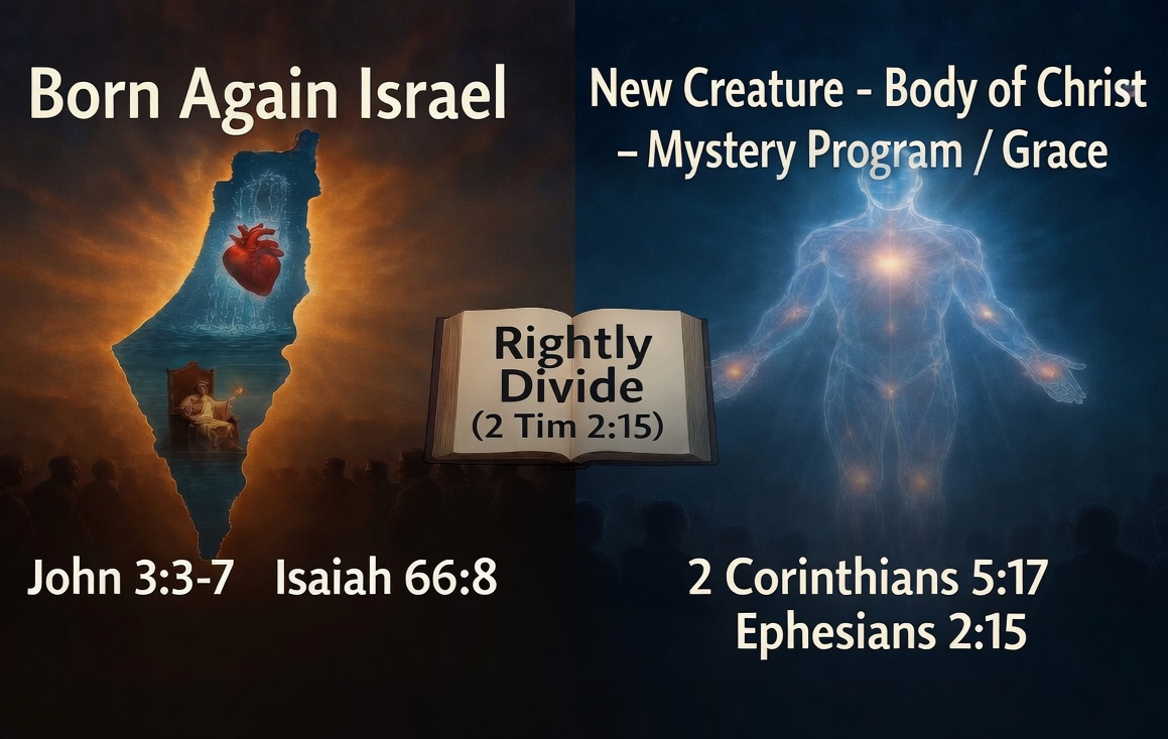
This is one of those places where a failure to rightly divide can quietly rob us of the distinct blessings Paul says belong to the new creature. Let’s walk through the Scriptures together, staying faithful to the pattern delivered to Paul, and see exactly how the Holy Spirit uses the sheep image—and where He does not use it for the Body of Christ.
The Sheep Metaphor in the Prophetic Kingdom Program
“My people hath been lost sheep: their shepherds have caused them to go astray…” (Jeremiah 50:6 KJV)
Have you ever traced how deeply the sheep-and-shepherd picture runs through the Old Testament prophets? It is not a casual illustration — it is one of the most consistent and emotionally charged metaphors God uses to describe His covenant relationship with Israel. From the very beginning of the prophetic program, Israel is portrayed as God’s flock, often scattered and vulnerable because of unfaithful shepherds (their kings, priests, and leaders). The prophets repeatedly promise that one day the true Shepherd-King — the Messiah from the line of David — would come to gather, feed, and rule over them in the restored earthly kingdom.
This imagery begins in the Law and the Prophets and builds with increasing urgency as Israel’s history unfolds. Psalm 23 presents the Lord as the personal Shepherd who leads, restores, and protects His sheep. Isaiah 40:11 shows the coming Messiah tenderly carrying the lambs in His bosom and gently leading those with young. But the picture grows darker when the prophets rebuke Israel’s corrupt leaders:
“Woe be unto the pastors that destroy and scatter the sheep of my pasture! saith the LORD… I will set up shepherds over them which shall feed them: and they shall fear no more, nor be dismayed, neither shall they be lacking, saith the LORD. And I will raise unto David a righteous Branch, and a King shall reign and prosper, and shall execute judgment and justice in the earth.” (Jeremiah 23:1-5 KJV)
Ezekiel 34 is perhaps the clearest and most extended development of this theme. God indicts the selfish shepherds who have fed themselves instead of the flock, scattering the sheep among the nations. Then comes the glorious promise of the true Shepherd:
“And I will set up one shepherd over them, and he shall feed them, even my servant David; he shall feed them, and he shall be their shepherd. And I the LORD will be their God, and my servant David a prince among them… And I will make with them a covenant of peace…” (Ezekiel 34:23-25 KJV)
This is not generic poetry. It is prophecy pointing forward to the earthly kingdom where the Messiah (the greater David) will reign from Jerusalem, regather the scattered sheep of Israel, and establish peace. The sheep metaphor is inextricably tied to Israel’s national, earthly hope — the restoration of the kingdom spoken of since the world began.
Christ as the Fulfillment of the Prophetic Shepherd
When the Lord Jesus stepped onto the scene, He came exactly as the prophets had described — “a minister of the circumcision for the truth of God, to confirm the promises made unto the fathers” (Romans 15:8 KJV). He openly identified Himself as the promised Shepherd:
“I am the good shepherd: the good shepherd giveth his life for the sheep… And other sheep I have, which are not of this fold: them also I must bring, and they shall hear my voice; and there shall be one fold, and one shepherd.” (John 10:11, 16 KJV)
Notice the limitation in His earthly ministry. He told the Canaanite woman:
“I am not sent but unto the lost sheep of the house of Israel.” (Matthew 15:24 KJV)
And when He commissioned the Twelve:
“Go not into the way of the Gentiles… But go rather to the lost sheep of the house of Israel. And as ye go, preach, saying, The kingdom of heaven is at hand.” (Matthew 10:5-7 KJV)
This was kingdom readiness preaching. The sheep metaphor was not being stretched into a universal description of all believers; it remained firmly anchored in Israel’s prophetic program and the offer of the earthly kingdom.
Even after His resurrection, the focus stayed on Israel first. The apostles asked the risen Lord:
“Lord, wilt thou at this time restore again the kingdom to Israel?” (Acts 1:6 KJV)
Jesus did not correct their expectation — He simply told them the timing was not for them to know. Peter’s Pentecost message was saturated with this same kingdom hope, calling Israel to repent so the “times of refreshing” could come and God would send Jesus Christ to fulfill all that the prophets had spoken (Acts 3:19-21).
The Little Flock and the Scattered Remnant
Jesus comforted the small believing remnant — the “little flock” — with the promise of the kingdom:
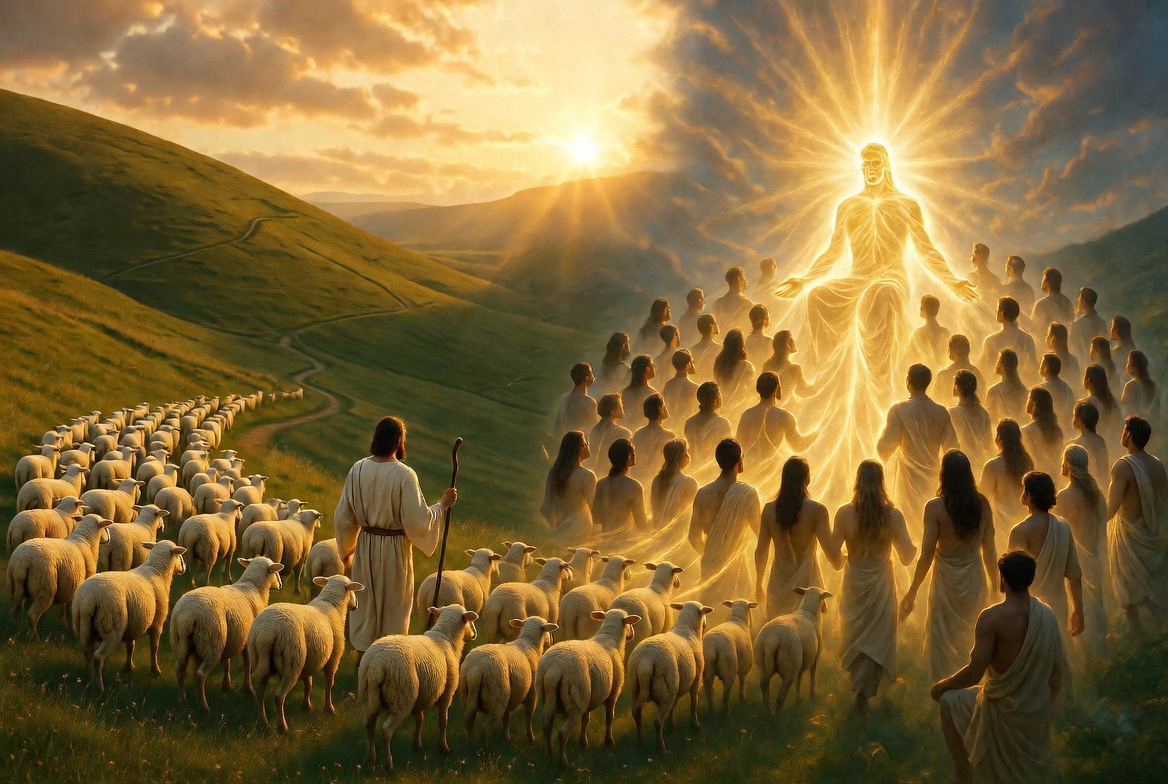
“Fear not, little flock; for it is your Father’s good pleasure to give you the kingdom.” (Luke 12:32 KJV)
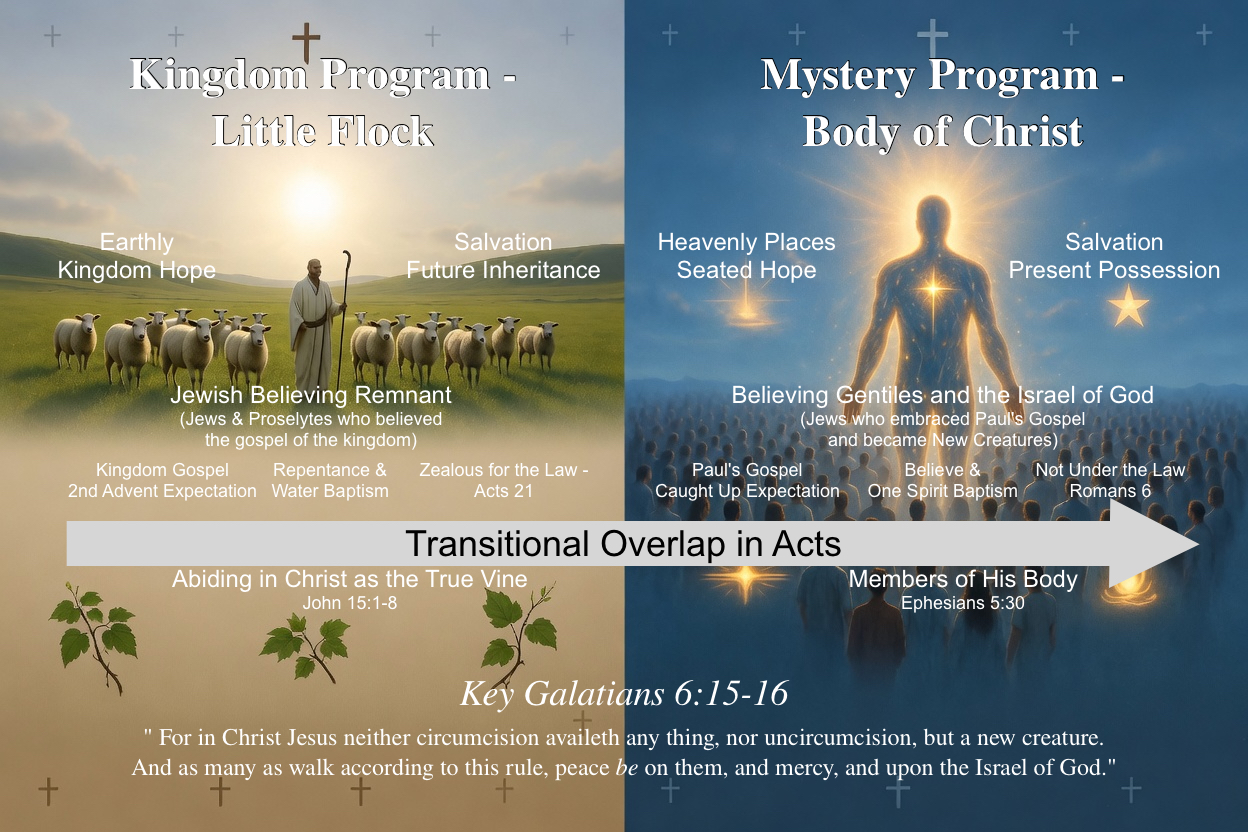
This “little flock” became the churches of Judaea (Galatians 1:22) and the scattered Jewish believers Peter wrote to as “strangers scattered” (1 Peter 1:1). James addressed the same group as “the twelve tribes which are scattered abroad” (James 1:1). Their hope remained earthly and national — the restoration of the kingdom to Israel under their Messiah-Shepherd.
Peter continued using the sheep imagery when writing to these Jewish believers:
“For ye were as sheep going astray; but are now returned unto the Shepherd and Bishop of your souls.” (1 Peter 2:25 KJV)
This fits perfectly with the prophetic program. The Hebrew epistles (Hebrews through John’s writings) continue this vine-and-branch, abide-or-be-cut-off language that belongs to Israel’s earthly hope.
Why the Distinction Matters for Us Today
The sheep/shepherd metaphor is not a generic picture that automatically applies to every believer in every age. It is rooted in the prophetic program spoken since the world began — the earthly kingdom promises to Israel. Paul, the apostle to the Gentiles and the one to whom the mystery was revealed, never once calls the Body of Christ “sheep” or refers to Christ as our Shepherd in that sense. Instead, he gives us a higher, heavenly identity:
“For by one Spirit are we all baptized into one body…” (1 Corinthians 12:13 KJV)
“For we are members of his body, of his flesh, and of his bones.” (Ephesians 5:30 KJV)
“Therefore if any man be in Christ, he is a new creature…” (2 Corinthians 5:17 KJV)
Have you seen how deliberately Paul avoids the old metaphor and instead magnifies the new creation reality? We are not waiting for an earthly Shepherd to appear and lead us into a restored kingdom. We are already members of His Body, seated in heavenly places, complete in Him, and indwelt by Christ Himself.
The metaphor still has its proper place — it beautifully describes the little flock and the future earthly program for Israel. But for us in this dispensation of the grace of God, Paul gives us something far more intimate and heavenly: we are not sheep in a fold; we are living members of the risen, ascended Christ.
That distinction is liberating. It keeps us from mixing programs and from trying to live under kingdom shadows when we have already been translated into the kingdom of His dear Son (Colossians 1:13).
Have you been living under the weight of trying to be “good sheep” who must perform to stay in the fold? Or have you seen the glorious truth that you are already a living member of His Body, accepted in the Beloved?
How a Metaphor Can Describe Different Things Without the Things Being the Same
Metaphors and similes are powerful teaching tools the Holy Spirit uses throughout Scripture. They help us grasp spiritual truth by comparing it to something familiar from everyday life. But here’s something important to remember: while some metaphors in Scripture describe genuine spiritual realities and identities (such as our position as members of the Body of Christ), many others are illustrative pictures used to highlight specific truths in their proper context without making the compared things identical.
A metaphor says one thing is another (e.g., “the LORD is my shepherd”). A simile uses “like” or “as” to make a comparison (e.g., “we are accounted as sheep for the slaughter”). Both are pictures, and we must rightly divide to see whether the Holy Spirit is revealing an actual identity or using an illustration for a particular program or truth.
The same image can be used in different ways for different programs without making the underlying realities the same thing.
Examples:
“Your adversary the devil, as a roaring lion, walketh about, seeking whom he may devour.” (1 Peter 5:8 KJV)
“Behold, the Lion of the tribe of Juda, the Root of David, hath prevailed to open the book…” (Revelation 5:5 KJV)
The same “lion” image pictures both Satan (fierce destroyer) and the Lord Jesus (conquering King). No one would say Satan and Christ are the same because both are called a lion.
Or consider leaven:
“Then Jesus said unto them, Take heed and beware of the leaven of the Pharisees and of the Sadducees.” (Matthew 16:6 KJV)
Yet in the parables, leaven is also used to picture the rapid spread of the kingdom. The same image illustrates different realities depending on the context.
Now let’s look at one of the most important examples for rightly dividing: the vine metaphor.
In John 15, during His earthly ministry to Israel, the Lord Jesus said:
“I am the true vine, and my Father is the husbandman. Every branch in me that beareth not fruit he taketh away: and every branch that beareth fruit, he purgeth it, that it may bring forth more fruit… I am the vine, ye are the branches: He that abideth in me, and I in him, the same bringeth forth much fruit: for without me ye can do nothing. If a man abide not in me, he is cast forth as a branch, and is withered; and men gather them, and cast them into the fire, and they are burned.” (John 15:1-2, 5-6 KJV)
This is classic kingdom teaching for Israel. The “branches” are individual Israelites (or the nation) in organic connection to the Messiah. Fruitfulness depends on abiding. Failure to abide results in being cut off. This is the same vine-and-branch language you find in the Hebrew epistles written to the little flock.
This is not the same as Paul’s revelation of the one new man, the Body of Christ. Paul never says we are “branches” in a vine. Instead, he says we are members of His Body:
“For by one Spirit are we all baptized into one body, whether we be Jews or Gentiles…” (1 Corinthians 12:13 KJV)
*> “For we are members of his body, of his flesh, and of his bones.” (Ephesians 5:30 KJV)
*> “Therefore if any man be in Christ, he is a new creature: old things are passed away; behold, all things are become new.” (2 Corinthians 5:17 KJV)
*> “For in Christ Jesus neither circumcision availeth any thing, nor uncircumcision, but a new creature.” (Galatians 6:15 KJV)
Do you see the difference? In the vine/branch picture, the relationship is organic and conditional — abide or be cut off. That fits Israel’s kingdom program and the little flock under the prophetic hope. In Paul’s mystery revelation, our position “in Christ” is positional, spiritual, and unconditional. We are already complete in Him (Colossians 2:10), already seated in heavenly places (Ephesians 2:6), and nothing can separate us from the love of God in Christ Jesus (Romans 8:38-39). We are not branches that can be cut off — we are living members of His Body, permanently joined to the Head.
Have you ever noticed how mixing these two pictures creates confusion? People take the conditional “abide or be cut off” language from John 15 and Hebrews and try to apply it to the Body of Christ, producing fear and performance-based living. But Paul never uses that language for us. He gives us something far higher: we are already new creatures, already reconciled, already forgiven of all trespasses (Colossians 2:13).
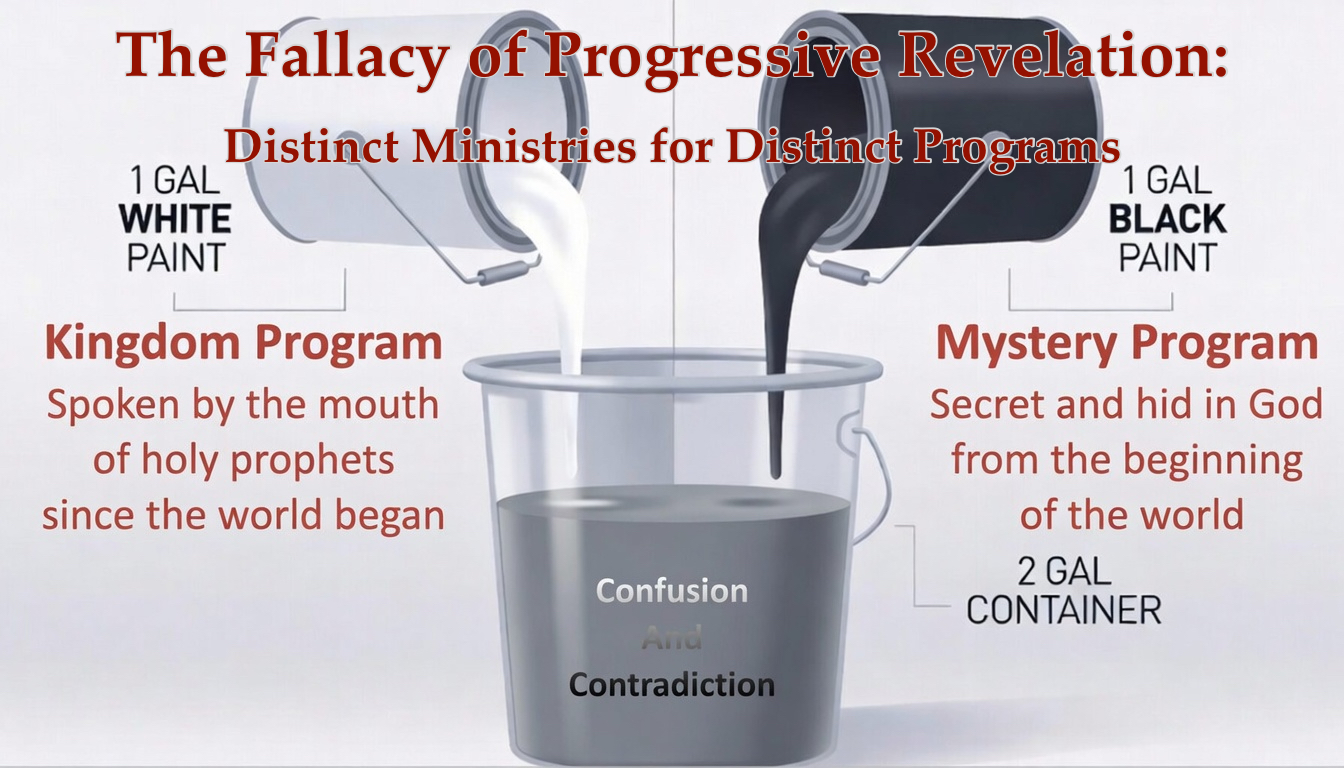
This is why metaphors and similes must be rightly divided. The same image can illustrate different truths in different programs without making the programs the same. The sheep metaphor belongs to Israel’s prophetic kingdom program. The Body metaphor belongs to the mystery revealed to Paul for this dispensation of grace.
That distinction keeps us from blending law and grace, kingdom and mystery, and from robbing believers of the glorious liberty and security we already have in Christ.
Paul’s Limited Use of the “Flock” Language—Only for Local Assemblies
Search Paul’s thirteen epistles carefully. You will not find him calling the entire Body of Christ “the flock,” referring to Christ as “our Shepherd,” or describing believers as sheep in the same way the Lord Jesus and the Hebrew epistles do for Israel. Not once.
Paul does use sheep/flock language a few times, but always in very limited, specific ways:
- Quotation from the Old Testament in Romans 8:36“As it is written, For thy sake we are killed all the day long; we are accounted as sheep for the slaughter.” (Romans 8:36 KJV)This is a direct quote from Psalm 44:22. Paul is applying an Old Testament lament to the sufferings of believers in this present age. It is not calling the Body of Christ “sheep” as an identity — it is using the familiar picture to describe the persecution and hardship we face while living in a hostile world. The context is comfort in suffering, not a description of our position in Christ.
- Metaphorical use in 1 Corinthians 9:7 “Who goeth a warfare any time at his own charges? who planteth a vineyard, and eateth not of the fruit thereof? or who feedeth a flock, and eateth not of the milk of the flock?” (1 Corinthians 9:7 KJV) Here Paul is using the picture of a shepherd feeding his flock to illustrate a principle of support for those who labor in the gospel. It is a general analogy about rightful compensation — not a doctrinal statement that the church is a “flock” under human shepherds. The point is practical: just as a shepherd eats from the flock he tends, those who minister spiritual things have a right to material support.
- The clearest and most important use — Acts 20:28-29 “Take heed therefore unto yourselves, and to all the flock, over the which the Holy Ghost hath made you overseers, to feed the church of God, which he hath purchased with his own blood. For I know this, that after my departing shall grievous wolves enter in among you, not sparing the flock.” (Acts 20:28-29 KJV) This remains the primary example. Paul is speaking face-to-face with the elders of the local church at Ephesus. The Holy Ghost made them overseers (bishops) of that specific flock. Their responsibility is local, pastoral care — to feed and guard the saints who gather in that city.
There is no hierarchy system in the Body of Christ.
These references show that when Paul does use flock language, it is either:
- An Old Testament quotation applied illustratively (Romans 8:36), or
- A general metaphor for support or local care (1 Corinthians 9:7; Acts 20).
He never elevates it into a title for the universal Body of Christ or establishes a ruling hierarchy of shepherds over the whole church. Overseers (bishops/elders/pastors) are connected to a specific location — “in every city” (Titus 1:5). Their oversight is local, not universal. They are fellow members of the Body, gifted by the Holy Ghost to serve the saints who assemble together in that place.
Christ alone is the Head:
“And hath put all things under his feet, and gave him to be the head over all things to the church, Which is his body, the fulness of him that filleth all in all.” (Ephesians 1:22-23 KJV)
“And he is the head of the body, the church: who is the beginning, the firstborn from the dead; that in all things he might have the preeminence.” (Colossians 1:18 KJV)
This is one of the great glories of the mystery. We do not need a middle-man or a religious hierarchy standing between us and the Head. Every believer has direct access to Christ. Local elders are servants — not lords — raised up to help the local assembly function in a healthy way. They feed the saints with sound doctrine from Paul’s epistles, guard against wolves, and equip the believers to grow up into Christ.
Have you seen how this protects both the headship of Christ and the practical care needed in every local church? It keeps us from the bondage of religious systems that insert human authority between the believer and the Lord.
The sheep/flock language fits beautifully in its proper place — describing the care of a local assembly or illustrating suffering. But when it is stretched to describe the universal Body of Christ or turned into a hierarchical system, it blurs the distinct heavenly identity Paul reveals for us. We are not sheep in an earthly fold under human shepherds. We are members of His Body, with Christ Himself as our living Head.
The Misapplication of Prophetic Warnings to the Shepherds of Israel to Pastors of Churches
One of the most common and damaging misapplications of the sheep/shepherd metaphor today is when people take the strong prophetic warnings given to the unfaithful shepherds of Israel and apply them directly to pastors and elders in local churches.
The prophets issued severe rebukes against Israel’s leaders — kings, priests, and false shepherds — who had scattered and abused the flock:
“Woe be unto the pastors that destroy and scatter the sheep of my pasture! saith the LORD… they have not visited them: behold, I will visit upon you the evil of your doings, saith the LORD.” (Jeremiah 23:1-2 KJV)
Ezekiel 34 is even more pointed as God condemns the selfish shepherds who fed themselves while neglecting the sheep, and then promises to replace them with the true Shepherd.
These are powerful, national-level rebukes aimed at the leaders of Israel under the prophetic kingdom program. They belong to the earthly hope and the responsibility of Israel’s national shepherds.
Yet today many teachers and preachers lift these passages and apply them straight to local church pastors, elders, or any spiritual leader in the Body of Christ. They use them to create fear, to demand absolute submission, or to portray pastors as the ultimate “shepherds” who stand in the place of Christ over the flock. This misapplication does several harmful things:
- It blurs the clear distinction between Israel’s earthly kingdom program and the heavenly calling of the Body of Christ.
- It places local elders under an Old Testament-style burden and authority that Paul never gives them.
- It subtly turns the relationship between pastor and people into a shepherd/sheep dynamic instead of the proper member-to-member relationship within the one Body under Christ the Head.
Paul’s instructions about local elders and overseers are practical and limited:
“Take heed therefore unto yourselves, and to all the flock, over the which the Holy Ghost hath made you overseers, to feed the church of God…” (Acts 20:28 KJV)
“Let the elders that rule well be counted worthy of double honour, especially they who labour in the word and doctrine.” (1 Timothy 5:17 KJV)
These men are raised up by the Holy Ghost for local care in a specific assembly. They are not national or universal “shepherds” in the prophetic sense. They are fellow members of the Body serving the saints in their city.
Christ alone is the Head of the Body. There is no hierarchy of human shepherds ruling over the universal church. When we misapply Israel’s prophetic warnings to today’s local pastors, we unintentionally import kingdom program language into the dispensation of grace and create a false sense of authority and dependence that Paul never establishes.
Have you noticed how often modern church culture uses phrases like “submit to your shepherd” or “the pastor is God’s appointed shepherd over you”? These ideas sound spiritual, but they come from blending the two programs rather than rightly dividing them.
In the Body of Christ, local elders are gifts to the assembly — servants who feed, guard, and equip (Ephesians 4:11-12). They are not the ultimate Shepherd. Christ is. We follow Him directly as members of His Body.
This is why Paul never calls the whole Body “the flock” or places local leaders in the role of the prophetic shepherds of Israel. Doing so would contradict the distinct heavenly identity he reveals for us.
Let us keep the prophetic warnings where they belong — with Israel’s program — and let Paul’s words define our identity and relationships today. We are not sheep under human shepherds. We are members of the Body of Christ, with Christ Himself as our living Head.
That distinction protects both the liberty of the believer and the proper, servant-hearted role of local elders.
Why Paul Never Uses the Sheep Metaphor for the Body of Christ
Paul could have easily continued using the familiar sheep-and-shepherd language if that was the proper identity for believers in this dispensation of grace. He quotes the Old Testament in Romans 8:36 and uses flock imagery illustratively in 1 Corinthians 9:7 and Acts 20, yet he never once calls the Body of Christ “the flock” or refers to Christ as “our Shepherd” in relation to us as members of the Body. Not once.
Instead, Paul deliberately gives us brand-new mystery truth that emphasizes a far higher and more intimate identity:
“For by one Spirit are we all baptized into one body, whether we be Jews or Gentiles…” (1 Corinthians 12:13 KJV)
*> “For we are members of his body, of his flesh, and of his bones.” (Ephesians 5:30 KJV)
*> “Therefore if any man be in Christ, he is a new creature: old things are passed away; behold, all things are become new.” (2 Corinthians 5:17 KJV)
*> “For in Christ Jesus neither circumcision availeth any thing, nor uncircumcision, but a new creature.” (Galatians 6:15 KJV)
When we import the sheep metaphor and apply it to the Body of Christ, it quietly takes away from Paul’s central focus on who we really are. It shifts our thinking away from the heavenly, positional reality of being living members of Christ’s own Body and pulls us back into an earthly, dependent, guidance-oriented mindset that belongs to Israel’s prophetic program.
The difference in how the relationship is understood is profound.
In the sheep/shepherd relationship (the picture used for Israel and the little flock), the sheep are dependent on the shepherd for leading, protection, feeding, correction, and safety. The sheep can stray. They need constant oversight and guidance. The relationship is one of following an external Shepherd who leads the flock from ahead or beside them. This fits Israel’s earthly kingdom hope perfectly — they looked for the Messiah to come as their Shepherd-King to regather the scattered sheep and rule over them on the earth.
In Paul’s revelation for the Body of Christ, the relationship is not that of sheep following a shepherd from a distance. We are members of His Body, organically and positionally united to Christ as the Head. The connection is internal and direct. We are not being led from outside; Christ lives in us (Colossians 1:27; Galatians 2:20). We are already complete in Him (Colossians 2:10), already seated together in heavenly places (Ephesians 2:6), already reconciled, and already forgiven of all trespasses (Colossians 2:13). There is no condition of “abide or be cut off.” Nothing can separate us from the love of God in Christ Jesus (Romans 8:38-39). Every member has direct access to the Head with no hierarchy or middle layer of human shepherds ruling over the universal Body.
Have you seen how applying the sheep picture subtly changes the entire focus? It moves us from resting in a finished, secure, heavenly union (“members of His Body”) to living in a more earthly, performance-based dependence (“stay close to the Shepherd, don’t stray, keep following”). It quietly pulls us back under shadows and conditions instead of letting us enjoy the glorious liberty and completeness we already possess as new creatures in Christ.
Paul wants us to see ourselves exactly as he describes us — members of the risen, ascended Christ Himself. That is the distinct identity of this dispensation. That is where our joy, security, and walk of faith are grounded.
The Little Flock and the Earthly Kingdom Hope
“Fear not, little flock; for it is your Father’s good pleasure to give you the kingdom.” (Luke 12:32 KJV)
This beautiful statement from the Lord Jesus is one of the most comforting and revealing verses about the identity of the believing Jewish remnant during His earthly ministry. Have you ever considered why He would use the tender term “little flock”? It was not just a term of endearment — it carried deep prophetic meaning.
The sheep-and-shepherd metaphor runs like a golden thread through the entire prophetic program spoken since the world began. From the earliest writings of the prophets, Israel is repeatedly pictured as God’s own flock — often scattered, vulnerable, harassed by predators, and suffering because of unfaithful shepherds (their kings, priests, and religious leaders). This imagery powerfully conveys both the tragedy of Israel’s condition and the bright hope of future restoration under the coming Messiah, the true Shepherd-King.
The prophets frequently rebuked the unfaithful shepherds who had scattered and abused the flock:
“Woe be unto the pastors that destroy and scatter the sheep of my pasture! saith the LORD… I will set up shepherds over them which shall feed them: and they shall fear no more, nor be dismayed, neither shall they be lacking, saith the LORD. And I will raise unto David a righteous Branch, and a King shall reign and prosper, and shall execute judgment and justice in the earth.” (Jeremiah 23:1-5 KJV)
Jeremiah looks forward to the day when God would raise up a righteous King from David’s line — the Messiah — who would properly care for the flock.
Ezekiel 34 is perhaps the most detailed and emotionally moving treatment of this theme in the Old Testament. After a long and scathing condemnation of the selfish shepherds who fed themselves and neglected the sheep, the Lord God declares that He Himself will step in:
“For thus saith the Lord GOD; Behold, I, even I, will both search my sheep, and seek them out… I will feed them in a good pasture… I will seek that which was lost, and bring again that which was driven away… And I will set up one shepherd over them, and he shall feed them, even my servant David; he shall feed them, and he shall be their shepherd. And I the LORD will be their God, and my servant David a prince among them… And I will make with them a covenant of peace…” (Ezekiel 34:11-25 KJV)
This is a clear prophecy of the Messiah (the greater David) who would regather the scattered sheep of Israel and establish them safely in their own land under His righteous rule.
Isaiah adds a touching picture of the gentleness of this coming Shepherd:
“He shall feed his flock like a shepherd: he shall gather the lambs with his arm, and carry them in his bosom, and shall gently lead those that are with young.” (Isaiah 40:11 KJV)
When the Lord Jesus appeared on the scene, He came exactly as these prophecies had described — “a minister of the circumcision for the truth of God, to confirm the promises made unto the fathers” (Romans 15:8 KJV). He openly identified Himself as the fulfillment of these promises:
“I am the good shepherd: the good shepherd giveth his life for the sheep… I am the good shepherd, and know my sheep, and am known of mine.” (John 10:11, 14 KJV)
Consistent with this role, Jesus limited His personal ministry and the initial commission of the Twelve to Israel:
“I am not sent but unto the lost sheep of the house of Israel.” (Matthew 15:24 KJV)
“Go not into the way of the Gentiles… But go rather to the lost sheep of the house of Israel. And as ye go, preach, saying, The kingdom of heaven is at hand.” (Matthew 10:5-7 KJV)
Jesus also spoke words of great comfort to the small group of Jewish believers who had received Him as their Messiah. He called them the “little flock” and assured them of the coming earthly kingdom:
“Fear not, little flock; for it is your Father’s good pleasure to give you the kingdom.” (Luke 12:32 KJV)
This “little flock” refers to the believing Jewish remnant during Christ’s earthly ministry and early Acts. They became the foundation of the churches of Judaea (Galatians 1:22) and later the scattered Jewish believers addressed in the Hebrew epistles.
Peter wrote specifically to this group — the scattered Jewish remnant:
“Peter, an apostle of Jesus Christ, to the strangers scattered throughout Pontus, Galatia, Cappadocia, Asia, and Bithynia…” (1 Peter 1:1 KJV)
He continued the same shepherd/sheep imagery:
“For ye were as sheep going astray; but are now returned unto the Shepherd and Bishop of your souls.” (1 Peter 2:25 KJV)
Peter also gave instructions to the elders among them:
“Feed the flock of God which is among you, taking the oversight thereof… And when the chief Shepherd shall appear, ye shall receive a crown of glory that fadeth not away.” (1 Peter 5:2-4 KJV)
James addressed the same audience:
“James, a servant of God and of the Lord Jesus Christ, to the twelve tribes which are scattered abroad, greeting.” (James 1:1 KJV)
The writer of Hebrews likewise continued this kingdom-oriented language:
“Now the God of peace, that brought again from the dead our Lord Jesus, that great shepherd of the sheep…” (Hebrews 13:20 KJV)
All of this fits the prophetic, earthly kingdom program. The little flock looked forward to the restoration of the kingdom to Israel under their Messiah-Shepherd. Their hope was earthly and national. The sheep/shepherd language is perfectly suited to that hope.
This sets the stage for understanding passages like John 10:16 (the “other sheep”), which we will examine next. The distinction is vital: the sheep metaphor belongs to Israel’s prophetic program. Paul gives the Body of Christ a higher, heavenly identity as members of His Body.
That distinction keeps both programs intact and lets us enjoy the distinct heavenly blessings revealed through Paul for this dispensation of grace.
The “Other Sheep” of John 10:16 in Its Proper Context
In John 10, Jesus expands the picture slightly when He says:
“And other sheep I have, which are not of this fold: them also I must bring, and they shall hear my voice; and there shall be one fold, and one shepherd.” (John 10:16 KJV)
“This fold” clearly refers to the Jewish fold — the house of Israel. The “other sheep” refers to Gentiles who would later hear His voice. However, in the context of Christ’s earthly ministry and the gospel of the kingdom, this points to believing Gentiles being brought into blessing under Israel’s restored earthly kingdom when the nation accepts her King. It envisions one unified earthly fold under the one Shepherd-King — the fulfillment of Old Testament prophecy where the nations are blessed through Israel.
This is not describing the mystery of the one Body of Christ. At this point, the truth that Jew and Gentile would be made one new man with a heavenly calling (completely apart from Israel’s earthly program) had not yet been revealed. That mystery was kept secret until it was committed to the Apostle Paul.
Paul never uses this “fold” language for the Body of Christ. Instead, he reveals something brand new:
“For by one Spirit are we all baptized into one body, whether we be Jews or Gentiles…” (1 Corinthians 12:13 KJV)
*> “Having abolished in his flesh the enmity… for to make in himself of twain one new man…” (Ephesians 2:15 KJV)
In the Body of Christ there is no Jewish “fold” that Gentiles are brought into. The middle wall is broken down, and believing Jews and Gentiles become one new creation with a heavenly position.
This distinction is crucial. The sheep/shepherd and fold language belongs to Israel’s prophetic, earthly kingdom program and the little flock. Paul gives the Body of Christ a higher, heavenly identity as members of His Body.
Have you seen how perfectly this sheep/shepherd language fits Israel’s earthly, national hope? It is not a generic description of all believers in every age. Paul, the apostle to the Gentiles, never once applies this metaphor to the Body of Christ. Instead, he reveals something far higher: we are members of His Body, with Christ as the Head.
That distinction keeps both programs intact and lets us enjoy the distinct heavenly blessings revealed through Paul for this dispensation of grace.
Our Identity Today: Members of His Body, Not Sheep in a Fold
“For by one Spirit are we all baptized into one body, whether we be Jews or Gentiles…” (1 Corinthians 12:13 KJV)
*> “For we are members of his body, of his flesh, and of his bones.” (Ephesians 5:30 KJV)
Paul could have continued using the familiar sheep-and-shepherd language if that was the proper identity for believers in this dispensation of the grace of God. He quotes the Old Testament in Romans 8:36 and uses flock imagery illustratively in 1 Corinthians 9:7 and Acts 20, yet he never once calls the Body of Christ “the flock” or refers to Christ as “our Shepherd” in relation to us as members of the Body. Not once.
Instead, Paul deliberately gives us brand-new mystery truth that emphasizes a far higher and more intimate identity:
“Therefore if any man be in Christ, he is a new creature: old things are passed away; behold, all things are become new.” (2 Corinthians 5:17 KJV)
*> “For in Christ Jesus neither circumcision availeth any thing, nor uncircumcision, but a new creature.” (Galatians 6:15 KJV)
*> “And hath put all things under his feet, and gave him to be the head over all things to the church, Which is his body, the fulness of him that filleth all in all.” (Ephesians 1:22-23 KJV)
*> “And he is the head of the body, the church: who is the beginning, the firstborn from the dead; that in all things he might have the preeminence.” (Colossians 1:18 KJV)
Often more than one metaphor can be applied in Scripture, but not when that metaphor contradicts our revealed identity.
The Holy Spirit frequently uses multiple metaphors to illustrate truth. For example, Christ is called both the Lion of the tribe of Judah (Revelation 5:5) and the Lamb of God (John 1:29). Satan is pictured as a roaring lion (1 Peter 5:8). Leaven can picture both evil doctrine and rapid growth. These metaphors highlight different aspects without creating contradictions because they are used in their proper context.
However, when a metaphor would blur or contradict the distinct identity Paul reveals for the Body of Christ, we must rightly divide. The sheep/shepherd and “fold” language belongs to Israel’s prophetic, earthly kingdom program. Applying it as our primary identity today pulls us back into an earthly, dependent, guidance-oriented relationship that does not match the heavenly reality Paul describes.
In the sheep/shepherd relationship, the sheep are dependent on an external Shepherd for leading, protection, feeding, and correction. The sheep can stray. They need constant oversight. This fits Israel’s earthly hope perfectly.
In Paul’s revelation for us, the relationship is not that of sheep following a shepherd from a distance. We are members of His Body — organically and positionally united to Christ as the Head. The connection is internal and direct. Christ lives in us (Colossians 1:27; Galatians 2:20). We are already complete in Him (Colossians 2:10), already seated together in heavenly places (Ephesians 2:6), already reconciled, and already forgiven of all trespasses (Colossians 2:13). There is no condition of “abide or be cut off.” Nothing can separate us from the love of God in Christ Jesus (Romans 8:38-39).
Have you seen how applying the sheep picture subtly changes the entire focus? It moves us from resting in a finished, secure, heavenly union (“members of His Body”) to living in a more earthly, performance-based dependence (“stay close to the Shepherd, don’t stray, keep following”). It quietly pulls us back under shadows and conditions instead of letting us enjoy the glorious liberty and completeness we already possess as new creatures in Christ.
Paul wants us to see ourselves exactly as he describes us — members of the risen, ascended Christ Himself. That is the distinct identity of this dispensation. That is where our joy, security, and walk of faith are grounded.
We are not sheep in a fold. We are living members of His Body.
© 2026 Edward R. Cross