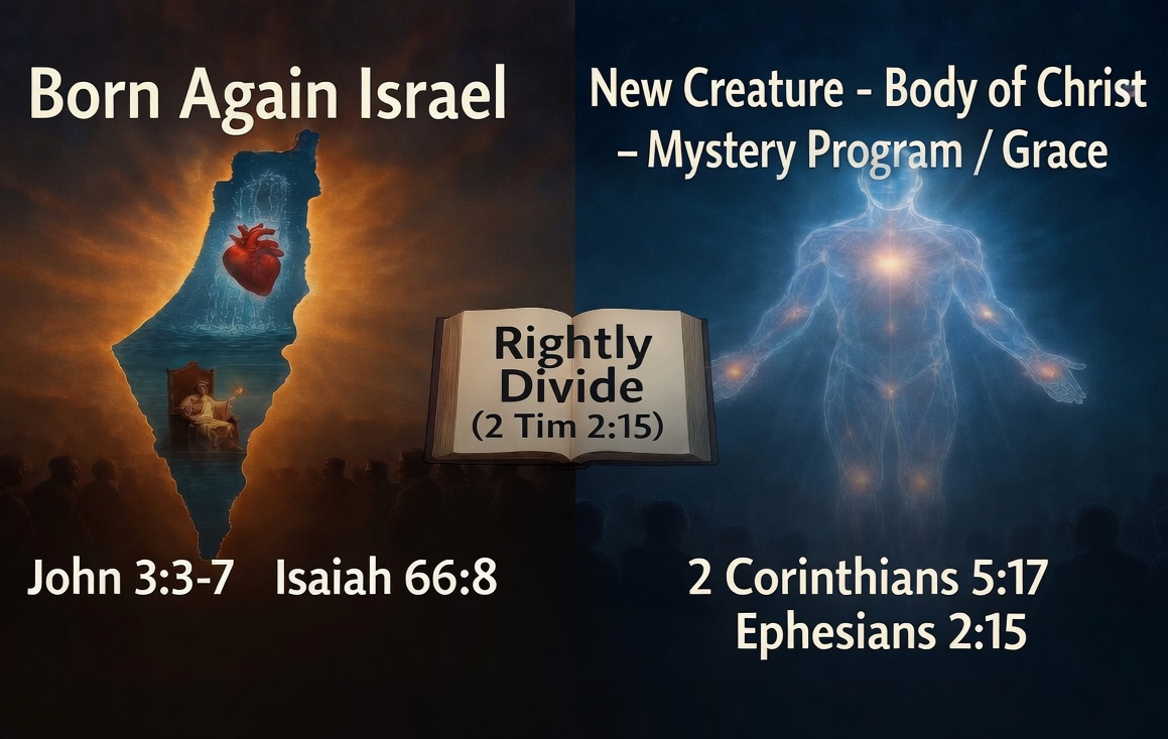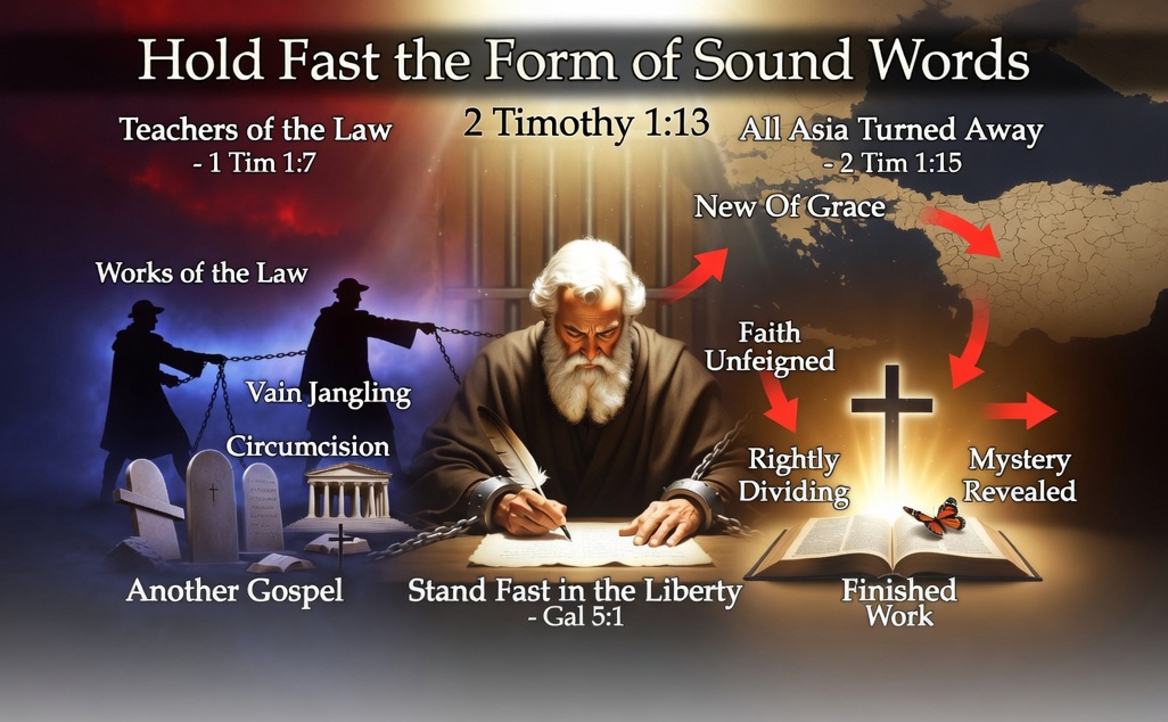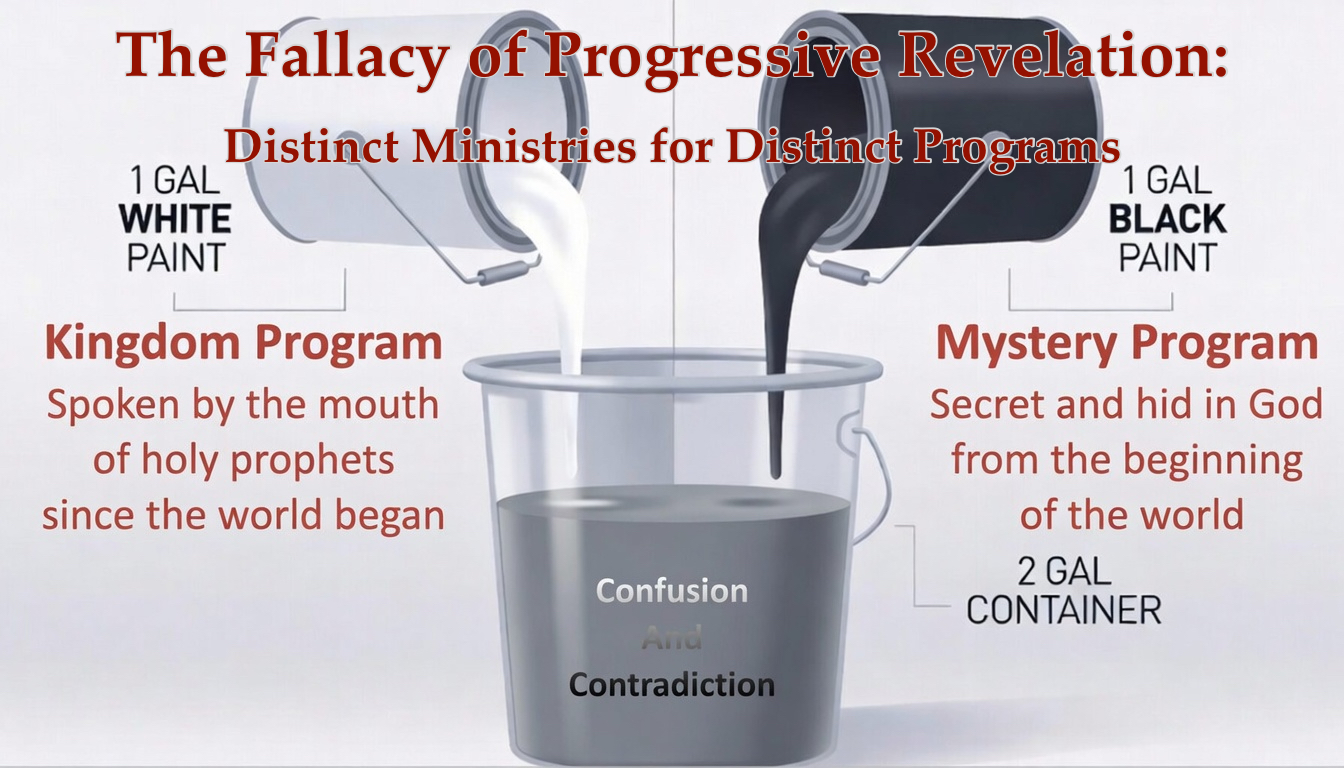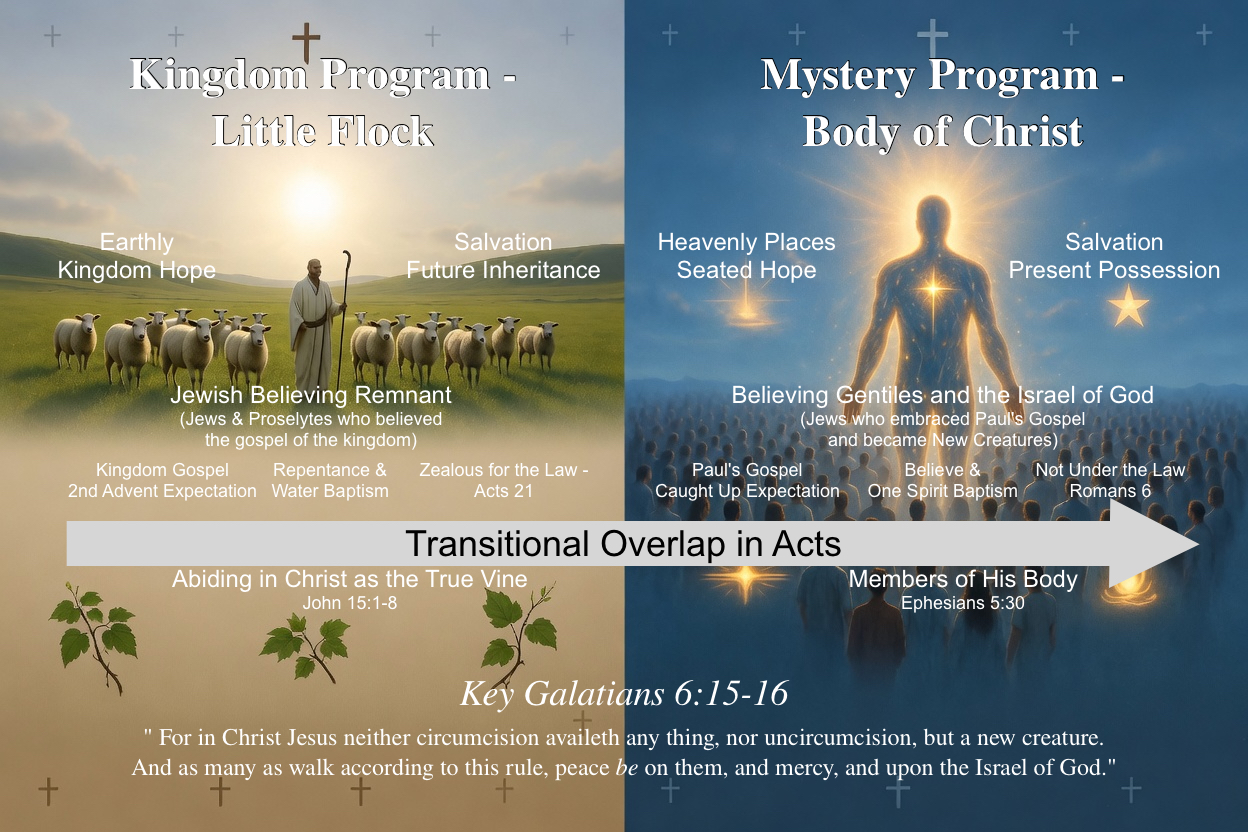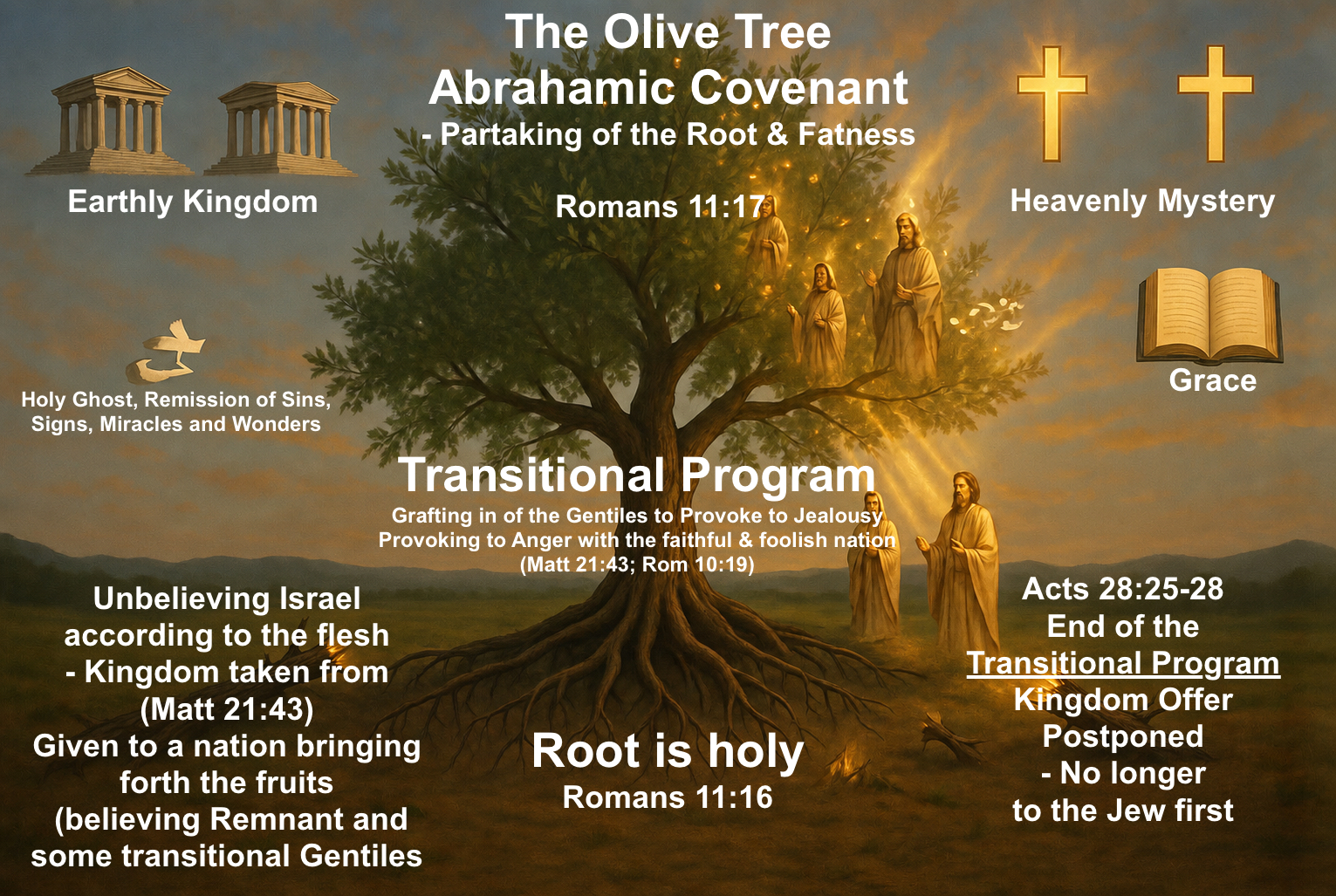
Have you ever read Romans 11 and felt the tension? On one hand, Paul clearly teaches that believers in this dispensation are new creatures where old distinctions no longer matter (2 Corinthians 5:17; Galatians 6:15). On the other hand, he gives a strong warning to graffed-in Gentiles that they could be “cut off.” How do these truths fit together without contradiction?
The answer is right division. Paul is not describing how the Body of Christ is formed in the olive tree illustration. He is explaining God’s temporary, transitional program during the Acts period, when the prophetic/kingdom offer to Israel was still open and the mystery was being revealed. The two programs overlapped for a season, and Paul uses the olive tree to show God’s perfect wisdom in handling both at once without contradiction.
As Justin Johnson teaches at Grace Ambassadors:
“Romans 9-11 does not look forward and explain the mystery revelation of the one body church. Instead, Paul is going back and explaining how God took away the kingdom promises from stumbling Israel, and gave them to a nation that could bear fruit.”
“Paul was not the first to explain this kingdom replacement. The wild graff can be found in the Lord’s earthly ministry to Israel in Matthew 21.”
Before we examine the olive tree in its proper context, we must recognize the major dispensational shift Paul highlights in Romans 11:6:
_“And if by grace, then is it no more of works: otherwise grace is no more grace. But if it be of works, then is it no more grace: otherwise work is no more work.” _
At the time Paul writes Romans, it is by grace—no longer “of works.” This is crucial. Paul does not say “not of works.” He says, “no more of works.” Paul does say to the Ephesians that they are “saved by grace through faith, not of works.” However, he is not speaking of the Gentiles here that have believed on Christ. The election of grace among Israel (the remnant) has obtained it, and the program has shifted. This sets the stage for understanding the graffing, the shared blessings, the warning, and the fulness of the Gentiles.
1. The Olive Tree Itself — Israel’s Covenantal Position (Prophetic Program)
In Romans 9-11, Paul is dealing with what happened to Israel, not with the body of Christ. Have you ever wondered why Paul suddenly introduces an olive tree in Romans 11? He isn’t inventing a new symbol. He is reaching back to language every Jewish reader (and anyone familiar with the prophets) would instantly recognize.
“The LORD called thy name, A green olive tree, fair, and of goodly fruit: with the noise of a great tumult he hath kindled fire upon it, and the branches of it are broken.” (Jeremiah 11:16)
Israel is explicitly pictured as a green olive tree that God Himself planted. Because of idolatry and unbelief, branches are broken off and judgment falls. But the prophets also gave wonderful promises of future restoration. One of the clearest pictures is found in Hosea 14.
“I will be as the dew unto Israel: he shall grow as the lily, and cast forth his roots as Lebanon. His branches shall spread, and his beauty shall be as the olive tree, and his smell as Lebanon.” (Hosea 14:5-6 KJV)
What a beautiful prophetic vision! After Israel’s chastening and repentance (Hosea 14:1-3), God promises to revive them like the dew revives the earth. The nation will once again flourish with deep roots, spreading branches, and the distinctive beauty and fragrance of a healthy olive tree. This is not just poetic language — it is covenant restoration language. The olive tree represents Israel’s place of blessing under the Abrahamic promises: fruitfulness, spiritual vitality, and the enjoyment of covenant favor.
Paul draws on this exact prophetic imagery in Romans 11 when he writes:
“For if the firstfruit be holy, the lump is also holy: and if the root be holy, so are the branches.” (Romans 11:16)
The root is the holy fathers and the Abrahamic covenant promises (Romans 11:28 — “as touching the election, they are beloved for the fathers’ sakes”). The fatness is the spiritual richness and covenant blessings that flowed from that root: remission of sins, the gift of the Holy Ghost, and the offer of the earthly kingdom.
This is Israel’s tree — not the Body of Christ. The olive tree belongs to the prophetic program spoken since the world began. The Body of Christ, by contrast, is a brand-new creation with a heavenly calling and blessings kept secret since the world began (2 Corinthians 5:17; Galatians 6:15; Ephesians 3:1-9; Colossians 1:26-27).
Paul is not explaining how the Church, the Body of Christ, is formed here. He is describing God’s sovereign dealings during a transitional period when the kingdom offer to Israel was still open while the mystery was being revealed.
So if this is Israel’s tree, what exactly does the graffing of Gentiles represent?
2. The Natural Branches — Israel (the Jewish Nation)
The natural branches represent the Jewish people — Israel according to the flesh.
“And if some of the branches be broken off, and thou, being a wild olive tree, wert graffed in among them, and with them partakest of the root and fatness of the olive tree…” (Romans 11:17 KJV)
Some of these natural branches — in fact, the vast majority — have been broken off because of unbelief (Romans 11:20). Paul says, “because of unbelief they were broken off.” That is past tense. Then, “For if God spared not the natural branches.” Again past tense. This is not a continued breaking off, but unbelieving Israel is being given a chance as they are provoked to jealousy to be saved under Paul’s gospel. The Lord Jesus Himself declared this transfer during His earthly ministry:
“Therefore say I unto you, The kingdom of God shall be taken from you, and given to a nation bringing forth the fruits thereof.” (Matthew 21:43 KJV)
This “nation bringing forth the fruits thereof” is the believing Jewish remnant — the little flock to whom the Lord promised the kingdom:
“Fear not, little flock; for it is your Father’s good pleasure to give you the kingdom.” (Luke 12:32 KJV)
These are the natural branches that remained connected to the root and continued to enjoy the covenant blessings during the transitional period.
The rest of Israel, however, were blinded. Paul makes this plain:
“What then? Israel hath not obtained that which he seeketh for; but the election hath obtained it, and the rest were blinded.” (Romans 11:7 KJV)
Again, blindness of the rest is past tense. It has already happened. This judicial blindness was foretold by the prophets (Isaiah 29:10; 6:9-10) and confirmed by David:
“And David saith, Let their table be made a snare, and a trap, and a stumblingblock, and a recompence unto them: Let their eyes be darkened, that they may not see, and bow down their back alway.” (Romans 11:9-10; Psalm 69:22-23)
At the time Paul wrote Romans, this was the current situation: “blindness in part is happened to Israel” (Romans 11:25). The unbelieving natural branches (Israel according to the flesh) were cut off from the root and fatness of the Abrahamic covenant blessings. They were set aside from their national position of privilege.
Important note on the Abrahamic covenant: The curses of Genesis 12:3 (“I will bless them that bless thee, and curse him that curseth thee”) were tied to Israel’s prophetic program and earthly kingdom. Because the natural branches are currently broken off from the root and fatness, the nation as a whole is temporarily set aside from its covenant position. Those national curses are not being enforced in the same way during this dispensation of grace. God is not presently dealing with nations on that basis. The mystery program is operating, and salvation is now by grace through faith in Paul’s gospel for both Jew and Gentile alike.
Paul explains the purpose of Israel’s fall:
“I say then, Have they stumbled that they should fall? God forbid: but rather through their fall salvation is come unto the Gentiles, for to provoke them to jealousy.” (Romans 11:11 KJV)
Make no mistake — the rest of Israel fell. Their fall opened the door for salvation to go to the Gentiles. Paul is not speaking here of the Body of Christ directly, but of Gentiles being graffed-in during this transitional time. The purpose was to provoke unbelieving Israel to jealousy.
He continues:
“Now if the fall of them be the riches of the world, and the diminishing of them the riches of the Gentiles; how much more their fulness?” (Romans 11:12 KJV)
Notice the important detail: Israel did not fall all at once. There was a diminishing — a gradual process during the Acts period as some believed and the rest were blinded, until the nation as a whole was set aside.
“For if the casting away of them be the reconciling of the world, what shall the receiving of them be, but life from the dead?” (Romans 11:15 KJV)
This “casting away” refers to unbelieving Israel. Important to note that the “casting away” of them has already occurred. Paul’s final public appeal to the Jewish leaders in Rome (Acts 28:17-28) marks the turning point. After they rejected his testimony concerning Jesus from the law and the prophets, Paul declared:
“Be it known therefore unto you, that the salvation of God is sent unto the Gentiles, and that they will hear it.” (Acts 28:28 KJV)
This was the official close of the transitional period. The Jews as a nation had ears but would not hear. Now salvation was sent fully to the Gentiles.
What is “the reconciling of the world”? It is not that the whole world is saved, but that God has reconciled the world to Himself in Christ, not imputing their trespasses unto them (2 Corinthians 5:19). The Body of Christ has been given the ministry of reconciliation and the word of reconciliation. This offer is now extended to all — including blinded, fallen Israel.
Paul asks, “What shall the receiving of them be, but life from the dead?” When God receives Israel back in the future, it will be nothing less than national resurrection.
In verse 12, Paul had spoken of the “riches of the world” and the “riches of the Gentiles” that came through Israel’s fall and diminishing. In that same context he asks, “how much more their fulness?” When Israel is no longer in unbelief after God resumes His prophetic program, the blessing will be even greater and the fulness of the Gentiles will come in (Romans 11:25).
3. The Wild Olive Branches — Believing Gentiles in the Transitional Acts Period
The wild olive branches represent believing Gentiles who, during the transitional period in the book of Acts, were graffed in among the remaining natural branches.
“…and thou, being a wild olive tree, wert graffed in among them, and with them partakest of the root and fatness of the olive tree.” (Romans 11:17 KJV)
Paul is directly addressing Gentiles (“thou”) in verse 13 when he says, “For I speak to you Gentiles…” These wild olive branches include both groups of believing Gentiles present during the overlap of the two programs:
- Gentiles who believed the gospel of the kingdom as preached by the Twelve, and
- Gentiles who believed Paul’s gospel of the grace of God.
They were cut out of the wild olive tree (Gentiles by nature) and graffed in “contrary to nature” (Romans 11:24) among the remaining natural branches (the believing Jewish remnant, the little flock).
Notice the careful wording: some of the natural branches were broken off because of unbelief. Into that space, wild olive branches were graffed in to partake of the root and fatness of the good olive tree.
This good olive tree is the one the Lord Himself planted — the house of Israel and the house of Judah:
“The LORD called thy name, A green olive tree, fair, and of goodly fruit: with the noise of a great tumult he hath kindled fire upon it, and the branches of it are broken. For the LORD of hosts, that planted thee, hath pronounced evil against thee, for the evil of the house of Israel and of the house of Judah…” (Jeremiah 11:16-17 KJV)
The Root and Fatness Explained
The “root” refers to the holy fathers and the Abrahamic covenant promises. Isaiah uses similar language for Israel’s future fruitfulness:
“He shall cause them that come of Jacob to take root: Israel shall blossom and bud, and fill the face of the world with fruit.” (Isaiah 27:6 KJV)
“And the remnant that is escaped of the house of Judah shall again take root downward, and bear fruit upward…” (Isaiah 37:31-32 KJV)
The “fatness” refers to the rich covenant blessings flowing from that root — pictured by olive oil, Israel’s source of light in the tabernacle (Exodus 27:20; Leviticus 24:2) and a symbol of covenant blessing for an obedient nation (Deuteronomy 8:8). When Israel was disobedient, one of the covenant curses was that their olive trees would cast their fruit (Deuteronomy 28:40; Ezekiel 19:12).
So when Paul says the wild branches partake of the root and fatness, he means these believing Gentiles were temporarily allowed to share in the spiritual blessings and covenant richness that belonged to Israel’s olive tree — the very blessings Israel was seeking.
This graffing was temporary and purposeful. It was not the formation of the one Body of Christ. The mystery of the one new man — where there is neither Jew nor Gentile (Ephesians 2:15; Galatians 6:15) — had not yet been fully revealed.
It is important that this be mentioned, why this is temporary. Paul said, “wert graffed in among them.” As of Paul writing the book of Romans, this was already done. He is not talking about future Gentiles being graffed into the good olive tree. He is talking about those during the provoking of unbelieving Israel during the transition. Notice again in (verse 24), “if thou wert cut out of the olive tree which is wild by nature, and wert graffed contrary to nature.” This is not a continual graffing program. The grafting has already taken place by the time Paul writes Romans 11.
Rather, believing Gentiles during the Acts period were graffed in among the remaining natural branches (the believing Jewish remnant, the little flock) in order to provoke unbelieving Israel to jealousy.
“I say then, Have they stumbled that they should fall? God forbid: but rather through their fall salvation is come unto the Gentiles, for to provoke them to jealousy.” (Romans 11:11 KJV)
Paul is not teaching that the Body of Christ is graffed into Israel’s olive tree. They don’t become Israel, the body of Christ is one new man, not Israel. He is explaining what God was sovereignly doing during that specific transitional time: using the fall and diminishing of Israel to open salvation to Gentiles and stir Israel to jealousy.
If these believing Gentiles were allowed to partake of the root and fatness of Israel’s olive tree, what exactly did that participation look like? How real was their share in Israel’s covenant blessings during this transitional period? That brings us to the next important part of the illustration.
4. Real Participation in Israel’s Covenant Blessings (“the Root and Fatness”)
Paul says these graffed Gentiles were brought into a real participation in Israel’s covenant blessings — the “root and fatness.”
“…and thou, being a wild olive tree, wert graffed in among them, and with them partakest of the root and fatness of the olive tree.” (Romans 11:17 KJV)
What did that look like practically during the Acts period?
- They received the Holy Ghost the same way the Jewish remnant did (Acts 10:44-47; 11:15-17 — “as on us at the beginning”).
- They received remission of sins through the kingdom gospel message being preached (repentance and faith in the risen Christ — Acts 2:38; 3:19; 10:42-43).
- They partook of the spiritual blessings flowing from Israel’s root — the Abrahamic promises, the outpouring of the Spirit, and the confirming signs, wonders, and spiritual gifts that still accompanied the kingdom offer while it remained open.
- They shared in the fellowship, power, and spiritual benefits that belonged to Israel’s covenant position at that moment.
This was not symbolic. It was genuine participation. God allowed these Gentiles to draw from the same root and enjoy the same fatness the believing Jewish remnant was enjoying. Paul confirms this real participation later in the same epistle:
“For if the Gentiles have been made partakers of their spiritual things, their duty is also to minister unto them in carnal things.” (Romans 15:27 KJV)
The Gentiles were truly made partakers of Israel’s spiritual things during this transitional time.
Sequence of the Graffing
The process unfolded in a clear order:
- First, during Jesus’ earthly ministry (Matthew 21), God graffed in the humble believing Jews (publicans, harlots, fishermen, sinners, the blind, etc.) — the little flock. Even though they were natural Israelites, they functioned as “wild branches” because the official religious leaders (the unbelieving natural branches) were being broken off for unbelief. The kingdom was taken from the unbelieving natural branches (Israel according to the flesh) and given to this faithful remnant — the “foolish nation” that would provoke Israel to anger. Paul said regarding Israel that God “concluded them all in unbelief,” so that he might have mercy on all.
- Then, during the Acts transition, God graffed in believing Gentiles (the wild olive tree of Romans 11:17) among the remaining natural branches (the Jewish remnant) to provoke them to jealousy.
Together, this combination of the believing Jewish remnant who formed the “faithful nation”and the graffed-in Gentiles that could bear fruit of the kingdom. The little flock provided the natural root connection, while the believing Gentiles were brought in to provoke the nation, fulfilling the Lord’s words in Matthew 21:43.
How Israel According to the Flesh Was Provoked to Jealousy and Angered by the Foolish Nation
God’s method was brilliant and direct. The Gentiles (the wild olive tree) were now receiving the very spiritual blessings Israel had been promised: the Holy Ghost, remission of sins, signs and wonders, and the power of the kingdom message. Israel according to the flesh watched as “no people” (Gentiles) and the “foolish nation” (the humble remnant plus these Gentiles) partook of the root and fatness that belonged to them.
The unbelieving natural branches became enemies of the gospel, so that God could have mercy on all. However, for the sake of the Jewish fathers they are beloved and Paul desired to see them saved.
“As concerning the gospel, they are enemies for your sakes: but as touching the election, they are beloved for the fathers’ sakes. For the gifts and calling of God are without repentance.” (Romans 11:28-29 KJV)
God gave gifts to the believing remnant as a precursor to their coming kingdom. Hebrews 6:4-5 says that the remnant believers “were made partakers of the Holy Ghost, and tasted the good word of God, and the powers of the world to come…” They were promised by Christ that they would “be endued with power from on high” when He sent the promise of the Father (Luke 24:49). He told them that they “shall receive power, after that the Holy Ghost is come upon” them (Acts 1:8). Hebrews 2:3-4 says the word was confirmed to the Hebrews “by those that heard Christ,” and that “God also bearing them witness, both with signs and wonders, and with divers miracles, and gifts of the Holy Ghost…”
Much to Peter’s surprise the “Holy Ghost fell on them,” the Gentile Cornelius and his household “as on us at the beginning” (Acts 11:15). They knew this because “they heard them speak with tongues, and magnify God…” (Acts 10:46 KJV). Peter then testified, “Forasmuch then as God gave them the like gift as he did unto us, who believed on the Lord Jesus Christ; what was I, that I could withstand God?” (Acts 11:17). The Gentiles who believed the gospel of the kingdom also received the witness, both with signs and wonders, and with divers miracles and gifts of the Holy Ghost.
The Gentile believers, even those who were made members of the body of Christ during the transition, also received these gifts of the Holy Ghost. They were being baptized in water during the transition so that the signs of an apostle could be manifest through Paul and his followers (2 Corinthians 12:12). These signs were given to the apostles to confirm the word being spoken and they were associated with water baptism (Mark 16:14-20) and the ministry of the Jewish apostles to Israel in Acts 2:18-19.
However, for the believing Gentiles at the time this was just part of the transitional program of provoking Israel to jealousy until the Jews’ final rejection and Paul’s pronouncement that salvation would now be sent to the Gentiles. The overlapping offer of the kingdom was put in abeyance. The message of the mystery would fully be declared for all. Once that was done in Acts 28, there was no longer a need to try to provoke them to jealousy and all the sign gifts would cease as Paul had told the Corinthians. Salvation would fully be sent to the Gentiles and they would hear it.
It is important that this be mentioned, why this is temporary. Paul said, “wert graffed in among them.” As of Paul writing the book of Romans, this was already done. He is not talking about future Gentiles being graffed into the good olive tree. He is talking about those during the provoking of unbelieving Israel during the transition. Notice again in (verse 24), “if thou wert cut out of the olive tree which is wild by nature, and wert graffed contrary to nature.”
Why the Grafting & Provoking Still Made Sense During the Transition
Paul says in Romans 11:7-8:
“What then? Israel hath not obtained that which he seeketh for; but the election hath obtained it, and the rest were blinded (According as it is written, God hath given them the spirit of slumber, eyes that they should not see, and ears that they should not hear;) unto this day.”
Then in verse 25 he gives the limit on that blindness:
“For I would not, brethren, that ye should be ignorant of this mystery… that blindness in part is happened to Israel, until the fulness of the Gentiles be come in.”
Even though “the rest” (the bulk of the nation) were blinded, that blindness was only “in part.” The unbelieving Jews could still be graffed back in during the provoking transition.
"And they also, if they abide not still in unbelief, shall be graffed in: for God is able to graff them in again. For if thou wert cut out of the olive tree which is wild by nature, and wert graffed contrary to nature into a good olive tree: how much more shall these, which be the natural branches, be graffed into their own olive tree?" (Romans 11:23-24 KJV)
The national kingdom offer was still officially open “to the Jew first.”
God used the graffing of Gentiles (the wild olive tree) precisely because many in Israel were becoming hardened. The provoking to jealousy was God’s merciful way of trying to reach the nation while the offer was still on the table. Every time Gentiles received the Holy Ghost, spoke in tongues, were healed, or rejoiced in the same spiritual blessings, it was meant to sting Israel and provoke her to jealousy (Romans 10:19; 11:11, 14).
Think of it like this: The blindness was real and growing. The graffing program was God’s tool during that window to stir whatever response was still possible before the national offer was withdrawn.
Once the transitional period closed (Acts 28:28), the special graffing/provoking program ended. At that point the blindness became the settled state “until the fulness of the Gentiles be come in.” God is no longer using the Body of Christ in that olive-tree way to provoke Israel. The mystery program now runs on its own distinct heavenly track.
So if these graffed Gentiles were given real participation in Israel’s covenant blessings during the transition, what kept them from being cut off like the unbelieving natural branches? This brings us to the serious warning Paul gives in the very next part of the illustration.
5. The Warning About Being “Cut Off” — Losing Their Place in the Transitional Program
Paul gives a strong and sobering warning to the graffed-in Gentiles:
“Boast not against the branches… thou standest by faith. Be not highminded, but fear: For if God spared not the natural branches, take heed lest he also spare not thee… otherwise thou also shalt be cut off.” (Romans 11:18-22)
This is a serious warning. “Losing their place” meant being broken off from the current transitional graffing arrangement — no longer partaking of the root and fatness in that special sense, and no longer serving in the role of provoking Israel to jealousy.
Important clarification: This warning is not about losing salvation or being cut off from Christ or the Body of Christ. It is about losing their position and privilege in the transitional program. The warning is addressed to the same “thou” Paul mentioned earlier in the chapter — the Gentiles who at that time had been graffed in. He is not speaking to future generations of Gentile believers. He is speaking to those Gentiles who were then partaking of the root and fatness during the overlap period.
Paul warns them not to boast “against the branches” — that is, against the unbelieving natural branches. Why? Because the goodness and covenantal blessings they were enjoying did not come from themselves. They came from the root.
“Well; because of unbelief they were broken off, and thou standest by faith. Be not highminded, but fear: For if God spared not the natural branches, take heed lest he also spare not thee.” (Romans 11:20-21)
Their standing in the goodness of those covenantal blessings was by faith. Therefore Paul warns them against being high-minded and tells them to fear, because if God did not spare the natural branches, He might not spare them either.
“Behold therefore the goodness and severity of God: on them which fell, severity; but toward thee, goodness, if thou continue in his goodness: otherwise thou also shalt be cut off.” (Romans 11:22)
The goodness was the partaking of the root and fatness. The severity was being cut off from them. If they did not continue in the goodness of those covenantal blessings by faith, then they too would be cut off from that participation — just as the unbelieving natural branches had been.
For the Gentiles who had believed the gospel of the kingdom, this warning carried serious weight, because their salvation was still presented as a future inheritance tied to endurance in the kingdom program. For the Gentiles who were already members of the Body of Christ, their eternal salvation was secure in Christ — they were already seated together in heavenly places (Ephesians 2:6). For them, being “cut off” would mean losing the temporary enjoyment of Israel’s covenant blessings and their role in the provoking program during the transition, not losing their position in the Body of Christ.
Paul immediately balances the warning with hope for Israel:
“And they also, if they abide not still in unbelief, shall be graffed in: for God is able to graff them in again.” (Romans 11:23)
The unbelieving natural branches (Israel according to the flesh) were still able to be graffed back in. God is able to do it. Paul is preparing to speak of what could happen to unbelieving Jews during the provocation, but also will actually happen in the future. God is not done with Israel.
“For if thou wert cut out of the olive tree which is wild by nature, and wert graffed contrary to nature into a good olive tree: how much more shall these, which be the natural branches, be graffed into their own olive tree?” (Romans 11:24)
Paul is not speaking to future generations of Gentiles here. He is addressing the believing Gentiles who had already been graffed in at the time he wrote Romans — both those under the kingdom gospel and those in the Body of Christ. The possibility of the natural branches (unbelieving Israel) being graffed back into their own olive tree remains open. This sets the stage for what Paul will reveal next about God’s long-term plan for Israel.
With the warning and the hope for Israel’s future clearly presented, we now come to an important key for understanding the entire passage: progressive revelation. Paul did not give the full mystery of the one Body and the new creature all at once. That truth was being revealed gradually during the transitional period. This helps us see why the olive tree illustration still uses language tied to Israel’s program even as the new creature reality was already beginning to break through.
6. Progressive Revelation: The New Creature Truth Was Revealed Early
Paul writes about believers being new creatures where old distinctions no longer matter long before Acts 28 and the prison epistles. This is a beautiful and important example of progressive revelation in Paul’s ministry.
Even while the transitional graffing was still active and the olive tree warnings were in force, Paul was already revealing core mystery truths about the new creature:
“Therefore if any man be in Christ, he is a new creature: old things are passed away; behold, all things are become new.” (2 Corinthians 5:17 KJV)
“For in Christ Jesus neither circumcision availeth any thing, nor uncircumcision, but a new creature.” (Galatians 6:15 KJV)
Have you seen what this means? The moment a person trusted Paul’s gospel of the grace of God — whether Jew or Gentile — they were instantly made a brand-new creation in Christ. Old distinctions (Jew/Gentile, circumcision/uncircumcision) no longer determined their standing before God. They were already complete in Him (Colossians 2:10), seated together in heavenly places (Ephesians 2:6), and blessed with all spiritual blessings (Ephesians 1:3), even while living during the overlap period.
This shows that the new creature reality was true from the very beginning of Paul’s ministry for every believer who trusted his gospel. The graffing warnings in Romans 11 co-existed with this truth because both programs were running side-by-side during the transition. The Corinthians, for example, were already new creatures (secure in Christ) when Paul wrote 2 Corinthians 5, yet they were still living in the transitional graffing time. Therefore the warning about highmindedness and possible loss of place in the provoking program still applied to them at that moment in a practical sense.
As the transition drew to a close (especially after Acts 28:28), Paul gave the full, mature revelation of the mystery in the prison epistles. There he no longer issues graffing warnings. Instead, he emphasizes eternal security, completeness in Christ, and the one new man where the old distinctions have been permanently abolished (Ephesians 2:15; Colossians 2:10; 3:11).
This progressive unfolding protects us from confusion. The new creature standing was secure the whole time for those who believed Paul’s gospel, but the transitional role in the olive tree picture had its own temporary warnings and responsibilities. This was already true for the Corinthians and other believers during the Acts period. The graffing warning in Romans 11 was only about their temporary role in the transitional program — not about losing their eternal position in the Body of Christ.
Understanding progressive revelation helps us rightly divide Romans 11. Paul could speak of real participation in the root and fatness (with real warnings attached) while at the same time declaring the new creature reality that was already true for every believer in his gospel. Both truths were operating at the same time during the transition, but they belonged to two different programs — one temporary and earthly, the other eternal and heavenly.
Understanding progressive revelation helps us see that Paul was revealing the new creature reality even while the transitional olive tree program was still operating. But how did this play out on the ground during his actual travels? As we look at Paul’s third missionary journey, we watch the progressive blinding of Israel intensify while the mystery truths continued to shine brighter. This leads us naturally into the next stage of the story.
6.5 Paul’s Third Missionary Journey & the Progressive Blinding of Israel
Paul had already defended the pure grace gospel at the Jerusalem council (Acts 15; Galatians 2:1-10). The “new creature” revelation he later writes about was not some gradual evolution of kingdom doctrine — it was brand-new mystery truth committed to him for this dispensation of grace. We see this progressive revelation unfolding powerfully during Paul’s third missionary journey.
Strengthening the Galatian Churches (Acts 18:23)
Paul revisits the churches he had planted on his previous journeys. He sees how quickly some were being removed from the grace of Christ unto another gospel. While in this region — or very shortly afterward — he writes the Epistle to the Galatians, boldly declaring the new-creature truth:
“For in Christ Jesus neither circumcision availeth any thing, nor uncircumcision, but a new creature.” (Galatians 6:15 KJV)
Ministry in Ephesus (Acts 19)
Paul spends approximately two to three years in Ephesus, a major center of influence. It is during this extended time that he writes 1 Corinthians. The new-creature reality is fresh on his heart as he corrects the carnal divisions and instructs the church in the deep things of God.
Riot in Ephesus → Macedonia (Acts 19:23–20:1)
After the great riot stirred up by the silversmiths, Paul leaves Ephesus and travels into Macedonia. This is when he writes 2 Corinthians, once again lifting up the glorious new-creature truth:
“Therefore if any man be in Christ, he is a new creature: old things are passed away; behold, all things are become new.” (2 Corinthians 5:17 KJV)
Three Months in Corinth/Greece (Acts 20:2-3) — Writes Romans
This becomes one of the most significant moments in the transition. While spending three months in Greece (likely Corinth), Paul writes the Epistle to the Romans. In chapters 9–11 he explains the current spiritual condition of Israel:
“What then? Israel hath not obtained that which he seeketh for; but the election hath obtained it, and the rest were blinded.” (Romans 11:7 KJV)
He also reveals that this blindness is only “in part” and will last “until the fulness of the Gentiles be come in” (Romans 11:25). Paul knows that, other than the remnant, the rest of Israel are already blinded in part. This is why he is willing to face great personal danger to bring an offering to the poor saints in Jerusalem (Romans 15:25-31; Acts 21). He is racing against the coming moment when Israel’s rejection would become complete and the door would fully swing open to the Gentiles without further national offer.
This heavy burden for his “kinsmen according to the flesh” is palpable throughout Romans 9–11. Paul grieves for Israel while simultaneously rejoicing that the mystery gospel is going forward.
Journey to Jerusalem and Arrest (Acts 20:3–21:17)
Paul delivers the offering, arrives in Jerusalem, and the events leading to his arrest unfold rapidly. Despite warnings, he presses on, willing to be bound for the sake of his people and the gospel.
Acts 28 — The Partial Blinding and their full setting aside is Officially Declared
Years later, while under house arrest in Rome, Paul meets with the leading Jews of the city. After they reject his testimony concerning Jesus from the law and the prophets, he makes the solemn, official declaration:
“Be it known therefore unto you, that the salvation of God is sent unto the Gentiles, and that they will hear it.” (Acts 28:28 KJV)
At this point the transition is complete. The partial blindness spoken of in Romans 11 has now become settled national blindness. The prophetic program for the nation goes into abeyance, and the dispensation of the grace of God to us Gentiles stands fully in the foreground.
Why This Matters
Have you seen how beautifully this fits together? In Romans 11, written before Paul’s trip to Jerusalem, he already sees the partial blinding and feels the heavy burden to reach Israel one more time — because he knows the time of their full setting aside is coming. By Acts 28, that time has arrived. The prophetic program for the nation is set aside, and the dispensation of the grace of God now moves forward unhindered.
This historical progression is one of the clearest examples of right division in action. It keeps us from mixing the programs and helps us appreciate why Paul’s gospel and the “new creature” truth are so central for us today. The new creature reality was true from the beginning of Paul’s ministry, even while the transitional olive tree program was still operating. Understanding this timeline protects us from confusion and allows us to stand fast in the liberty and blessings that belong to this present dispensation of grace.
With Paul’s third missionary journey and the events of Acts 28 now in view, we can see the progressive blinding of Israel reaching its climax. The transitional period is closing. The partial blindness of Romans 11 has become full national blindness.
This raises an important question: If Israel’s national blindness became settled at this point, what exactly is “the fulness of the Gentiles” that Paul mentioned in Romans 11:25? When does the special transitional graffing program officially end, and what does that mean for how we understand the olive tree illustration today?
This brings us to one of the most misunderstood phrases in the chapter.
7. The Fulness of the Gentiles — What It Actually Is (and When the Graffing Program Ended)
Paul lays it out plain in Romans 11:25:
“For I would not, brethren, that ye should be ignorant of this mystery, lest ye should be wise in your own conceits; that blindness in part is happened to Israel, until the fulness of the Gentiles be come in. And so all Israel shall be saved…” (Romans 11:25-26 KJV)
Have you ever stopped to ask what Paul actually means by “the fulness of the Gentiles”?
Paul specifically warns the Gentiles not to be “wise in their own conceits.” That kind of thinking would lead them to conclude that God was completely done with Israel — that He had cast them away forever and replaced them with the Gentiles as many teach the church being the true Israel of God. But Paul makes it clear that the exact opposite is true. The fulness of the Gentiles is intimately tied to Israel’s future restoration. The two are inseparably connected in God’s plan.
Notice carefully how Paul connects the two ideas: “…until the fulness of the Gentiles be come in. And so all Israel shall be saved.” The words “and so” do not mean “after which” as many assume. They mean “in this manner” or “in this way.” Paul is telling us that according to the prophets, all Israel must be saved before the Gentiles enter their fulness in the kingdom. Also, don’t miss what the actual “mystery” is in this passage. The mystery is not that “all Israel shall be saved” — the prophets had already foretold that clearly. The mystery is not Israel being blinded, that was part of prophecy. The mystery Paul is revealing is that Israel’s blindness is only “in part” right now, and that this partial blindness continues only until the fulness of the Gentiles comes in.
This is exactly what the nation of Israel will one day say when they look upon the One they pierced. The Lord Jesus Himself quoted Psalm 118:26 when He said in Matthew 23:39: “For I say unto you, Ye shall not see me henceforth, till ye shall say, Blessed is he that cometh in the name of the Lord.” When that glorious day arrives, every eye shall see Him — including the very people who pierced Him. Revelation 1:7 declares: “Behold, he cometh with clouds; and every eye shall see him*,* and they also which pierced him*:* and all kindreds of the earth shall wail because of him. Even so, Amen.” In that moment, Israel will nationally recognize their Messiah, confess with their mouths “Blessed is he that cometh in the name of the Lord,” and be saved in a single day. They will have their sight restored. Their partial blindness will be lifted, “all Israel shall be saved,” and only then will the fulness of the Gentiles come in according to the prophetic program.
The context of Romans 11 itself keeps everything in its proper place—and it lines up beautifully with the prophets once we let the text speak.
First, notice the grammar. When Paul talks about the Gentiles being “graffed in” among the natural branches, he puts it in the past tense: “thou wert graffed in” (v. 17), “wert graffed in” (v. 19), “they were broken off, that thou mightest be graffed in” (v. 19). That special transitional graffing and provoking program—the one that overlapped while the kingdom offer was still open during the book of Acts—was already behind him when he wrote Romans. It was temporary.
Throughout the transitional period, Paul followed the divine order of “to the Jew first” (Romans 1:16). This was not optional—it was part of how God operated while the kingdom offer remained open and the two programs overlapped.
- In Pisidian Antioch: “Then Paul and Barnabas waxed bold, and said, It was necessary that the word of God should first have been spoken to you*:* but seeing ye put it from you, and judge yourselves unworthy of everlasting life, lo, we turn to the Gentiles.” (Acts 13:46 KJV)
- In Corinth: “And when they opposed themselves, and blasphemed, he shook his raiment, and said unto them, Your blood be upon your own heads; I am clean: from henceforth I will go unto the Gentiles.” (Acts 18:6 KJV)
These were repeated local turnings during the transition. The national kingdom offer and the graffing program were still active. The growing hardness and blasphemy of the natural branches showed the increasing blindness, but the overlap continued until the final declaration in Rome.
We see the end of the transitional overlap program at the close of the book of Acts. After the Jewish leaders in Rome rejected Paul’s testimony concerning Jesus from the law and the prophets, Paul quoted Isaiah and declared the turning point:
“And when they agreed not among themselves, they departed, after that Paul had spoken one word, Well spake the Holy Ghost by Esaias the prophet unto our fathers, Saying, Go unto this people, and say, Hearing ye shall hear, and shall not understand; and seeing ye shall see, and not perceive: For the heart of this people is waxed gross, and their ears are dull of hearing, and their eyes have they closed; lest they should see with their eyes, and hear with their ears, and understand with their heart, and should be converted, and I should heal them.” (Acts 28:25-27 KJV)
Right after this, Paul announced the official close of the transitional period:
“Be it known therefore unto you, that the salvation of God is sent unto the Gentiles, and that they will hear it.” (Acts 28:28 KJV)
At this point the special transitional graffing and provoking program ended along with all the fatness. The mystery program now stands fully revealed and operates on its own distinct heavenly track, without the temporary graffing of the transition.
The partial blindness of Romans 11 had become settled national blindness. The door that had been open “to the Jew first” was now fully open to the Gentiles without further national appeal. The prophetic program for Israel as a nation went into abeyance until God resumes His dealings with them in the future and the fulness of the Gentiles is come in.
This is why understanding the timing is so important. In Romans 11, written during the transition, Paul could still speak of the possibility of provoking Israel to jealousy and the potential for the natural branches to be graffed back in. By Acts 28, that transitional window had closed. The mystery program now moves forward unhindered, while we wait for the day when God resumes His dealings with Israel and the fulness of the Gentiles comes in.
So the fulness of the Gentiles is not some ongoing graffing happening right now. Paul is looking ahead to a future point after all Israel is saved. Israel’s national salvation comes first—“in a day,” just as the prophets foretold—and then the Gentiles come into their fulness of blessing in the kingdom.
Look at how Paul himself sets up the contrast earlier in the same chapter:
“Now if the fall of them be the riches of the world, and the diminishing of them the riches of the Gentiles; how much more their fulness?” (Romans 11:12 KJV)
Paul contrasts Israel’s current “fall” and “diminishing” (their present state of unbelief and blindness) with their coming fulness. Israel’s fulness means the nation will no longer be in unbelief but will come to belief. When “all Israel shall be saved” (Romans 11:26), the natural branches will be restored to the olive tree in faith. Just as their fall brought riches to the Gentiles, their future fulness (national repentance and belief) will bring even greater blessing to the world.
God set this up from the beginning. Israel was always meant to be the channel of blessing to the nations. Genesis 12:3 promised Abraham that “in thee shall all families of the earth be blessed.” The prophets paint the picture over and over. Isaiah 66:8 asks, “Who hath heard such a thing? who hath seen such things? Shall the earth be made to bring forth in one day*?* or shall a nation be born at once*?”* That’s Israel—born again as a nation in a single day when the Deliverer comes out of Sion and takes away their sins.
Once that happens, the fulness of the Gentiles flows in. Isaiah 2:2-3 tells us:
“And it shall come to pass in the last days, that the mountain of the LORD’s house shall be established in the top of the mountains… and all nations shall flow unto it. And many people shall go and say, Come ye, and let us go up to the mountain of the LORD… for out of Zion shall go forth the law, and the word of the LORD from Jerusalem.”
Gentiles streaming to restored Israel. Isaiah 11:10 adds that “in that day there shall be a root of Jesse, which shall stand for an ensign of the people; to it shall the Gentiles seek: and his rest shall be glorious.” Isaiah 49:22 has the Lord lifting up His hand to the Gentiles so they help carry Israel’s sons and daughters home. Isaiah 60:3 says “the Gentiles shall come to thy light, and kings to the brightness of thy rising.” Isaiah 66:12 pictures the glory of the Gentiles flowing into Israel like a river, with nations bringing their wealth and kings nursing at her side. Even Psalm 22:27 looks forward to the day when “all the ends of the world shall remember and turn unto the LORD: and all the kindreds of the nations shall worship before thee.” And Zechariah 8:23 gives us this beautiful picture: “Thus saith the LORD of hosts; In those days it shall come to pass, that ten men shall take hold out of all languages of the nations, even shall take hold of the skirt of him that is a Jew, saying, We will go with you: for we have heard that God is with you.”
This fulness comes only after the Gentile nations have been judged at the Lord’s return. The prophets describe how the nations will be gathered and judged before the King sits on His throne (see Joel 3:2 and the sheep-and-goats separation in Matthew 25). Not every nation or every person will enter the kingdom—only those survive that judgment. Those that remain will then worship the God of Israel in Jerusalem. Zechariah 14:16-19 puts it this way:
“And it shall come to pass, that every one that is left of all the nations which came against Jerusalem shall even go up from year to year to worship the King, the LORD of hosts, and to keep the feast of tabernacles. And it shall be, that whoso will not come up of all the families of the earth unto Jerusalem to worship the King, the LORD of hosts, even upon them shall be no rain…”
Have you caught how perfectly this fits the “until” and the “and so” in Romans 11:25-26? Israel stays in partial blindness until the fulness of the Gentiles be come in—after she is saved in a day. Then, “and so” (in that way, in this manner) all Israel shall be saved. The natural branches are graffed back into their own olive tree, the kingdom is set up on earth, the nations are judged, and the surviving Gentiles nations receive their fulness of salvation and provision through a saved Israel exactly as the prophets said.
This keeps the mystery program (our heavenly calling today) completely distinct from the prophetic program (Israel’s earthly kingdom tomorrow). The temporary graffing in Acts did its job and is past tense. Now we wait for that glorious day when Israel is saved in a day, the Deliverer comes out of Sion, the nations are judged, and the fulness of the Gentiles flows in as the nations that remain worships the God of Israel through the nation He first called.
Paul does not end on a note of permanent rejection. Even as he explains the current blindness and the end of the transitional program, he lifts our eyes to a glorious future for the natural branches. God is not finished with Israel according to the flesh. He has not replaced Israel with the church. God’s prophetic program will resume. This brings us to the triumphant hope that closes the chapter:
8. The glorious future for the natural branches
What appears at first to be the final mark of division in the chapter is actually a glorious promise of future restoration:
“And so all Israel shall be saved: as it is written, There shall come out of Sion the Deliverer, and shall turn away ungodliness from Jacob: For this is my covenant unto them, when I shall take away their sins.” (Romans 11:26-27 KJV)
“And so all Israel shall be saved” is Paul’s triumphant conclusion to the question he raised back in verse 1: “Hath God cast away his people?” God has not cast away His people whom He foreknew.
This future salvation (“all Israel shall be saved”) refers to the national restoration of Israel and includes the believing remnant who remained in the kingdom program. This group consists of two parts: the Jewish believing remnant (the little flock) and those Gentiles like Cornelius and his household who were graffed into the olive tree under the gospel of the kingdom and remained in that program. Their salvation is still future — tied to the coming kingdom, the times of refreshing, and the return of Christ (Acts 3:19-21).
In contrast, there were other Jewish remnant believers who also believed Paul’s gospel of the grace of God (such as Barnabas, Silas, and others who assisted Paul) and walked according to the rule of the new creature. These were made members of the Body of Christ and are part of the “Israel of God” in this present dispensation (Galatians 6:15-16; 2 Corinthians 5:17). Their salvation is secure now, not future.
God never leaves Himself without a witness to the blessings of Abraham.
"That the blessing of Abraham might come on the Gentiles through Jesus Christ; that we might receive the promise of the Spirit through faith." (Galatians 3:14 KJV)
God will one day return to the natural branches that were cut off and blinded. He will call the nation to national repentance, just as Peter urged in Acts 3:
“Repent ye therefore, and be converted, that your sins may be blotted out, when the times of refreshing shall come from the presence of the Lord; And he shall send Jesus Christ, which before was preached unto you: Whom the heaven must receive until the times of restitution of all things, which God hath spoken by the mouth of all his holy prophets since the world began.” (Acts 3:19-21 KJV)
The Deliverer — the Lord Jesus Christ at His second coming — will turn away ungodliness from Jacob. This national repentance and restoration is tied directly to the ministry of Elijah, who will come before “the great and dreadful day of the LORD” to turn the hearts of the fathers to the children and the children to the fathers (Malachi 4:5-6). Just as John the Baptist came in the spirit and power of Elijah to prepare Israel for Christ’s first coming, Elijah will come again to prepare the nation for His second coming.
How God Will Prepare the Nation During the Tribulation
Scripture shows several powerful means God will use during the future Tribulation period (called “the time of Jacob’s trouble” in Jeremiah 30:7) to bring Israel to the point of repentance and readiness for their Messiah:
- The Great Tribulation itself — This seven-year period of unparalleled judgment (Daniel 9:27; Matthew 24:21; Revelation 6–19) will act like a refining fire. It will purge the nation, separate the believing remnant from the unbelieving majority, and drive Israel to desperation so they finally cry out for their Messiah.
- The two witnesses (Revelation 11:3-12) — These powerful prophets will minister in Jerusalem for 3½ years with signs, wonders, and authority. They will prophesy, shut up heaven, turn waters to blood, and smite the earth with plagues. Their dramatic testimony will be impossible to ignore, especially in Israel.
- The 144,000 sealed Jewish servants (Revelation 7:1-8; 14:1-5) — God will seal 12,000 from each tribe of Israel. These Jewish evangelists will preach the gospel of the kingdom worldwide during the Tribulation. They will be divinely protected and will bring in a great multitude of saved people from every nation.
- The preaching of the gospel of the kingdom to all nations (Matthew 24:14) — The same gospel John the Baptist, Jesus, and the Twelve preached (“the kingdom of heaven is at hand”) will be proclaimed as a witness to all nations before the end comes. It calls for repentance and reception of the King.
- Signs, judgments, and the abomination of desolation (Matthew 24:15; Daniel 9:27; Revelation 6–19) — The seals, trumpets, and bowls of judgment, along with the Antichrist’s abomination in the temple, will create a final crisis. This will lead to the national repentance prophesied in Zechariah 12:10:
“And I will pour upon the house of David, and upon the inhabitants of Jerusalem, the spirit of grace and of supplications: and they shall look upon me whom they have pierced, and they shall mourn for him, as one mourneth for his only son…”
All of this prepares the way for the Deliverer to come out of Sion and turn ungodliness from Jacob. At that time God will fulfill His New Covenant promises (Jeremiah 31:31-34; Ezekiel 36:25-27). The natural branches who believe the gospel of the kingdom will be graffed back into their own olive tree and become part of the nation that brings forth the fruits thereof (Matthew 21:43).
So what does this mean for us in the present dispensation? If God has a glorious future plan to graff-in the natural branches back into their own olive tree, why is the Body of Christ today not being used to provoke Israel to jealousy the way the graffed-in Gentiles were during the Acts period? And how does this future graff-in differ from the temporary transitional program? This brings us to an important present-day distinction:
9. Why the Body of Christ Today Is NOT Being Used to Provoke Israel to Jealousy (and the Future graffing Back In)
Because the transitional graffing program has already ended at Acts 28, God is no longer using the Gentiles to provoke Israel through shared participation in Israel’s root and fatness.
We are now fully in the mystery program — the one new man, the Body of Christ, with its distinct heavenly calling and blessings that were kept secret since the world began (Ephesians 3:1-9; Colossians 1:25-27). The provoking mechanism — Gentiles being graffed in among the natural branches to partake of the root and fatness — belonged only to the overlap period in Acts. That temporary arrangement served its purpose and has now concluded. Today the Body of Christ is a completely separate program with its own heavenly hope and purpose.
Look again at Paul’s logic in Romans 11:24:
“For if thou wert cut out of the olive tree which is wild by nature, and wert graffed contrary to nature into a good olive tree: how much more shall these, which be the natural branches, be graffed into their own olive tree?”
Paul’s point is powerful. If God could do the unnatural thing of graffing wild Gentile branches into the cultivated olive tree during the transition, then how much easier will it be for Him to graff the natural branches (Israel according to the flesh) back into their own olive tree when the time comes? The unbelieving natural branches are currently cut off from the root and fatness, but they are not cast away forever (Romans 11:1). God still has a glorious plan for them in the future.
Important Clarification for Today
Even though the nation of Israel remains cut off from the olive tree and the prophetic program is in abeyance, any individual Jew can still be saved right now exactly like any Gentile. Paul explains why most of them cannot see Christ clearly:
“Seeing then that we have such hope, we use great plainness of speech: And not as Moses, which put a vail over his face… But their minds were blinded: for until this day remaineth the same vail untaken away in the reading of the old testament; which vail is done away in Christ.” (2 Corinthians 3:12-14)
When a Jew reads Moses and the Old Testament, that same veil remains upon their heart. They cannot see the glory of Christ or understand how the law pointed to Him. However, the moment their heart turns to the Lord, something wonderful happens:
“Nevertheless when it shall turn to the Lord, the vail shall be taken away.” (2 Corinthians 3:16)
At that instant the blindness is lifted for that individual. They see Christ clearly, believe Paul’s gospel of the grace of God, and are instantly made a new creature and placed into the Body of Christ (2 Corinthians 5:17; Galatians 6:15). There is no need to wait for national restoration or try to get graffed back into the olive tree today. Salvation is by grace through faith in the finished work of Christ — the same for Jew or Gentile.
This is why Paul can be so confident in God’s faithfulness even while the natural branches remain cut off today. The Body of Christ is not now being used as a provoking tool because that transitional role has served its purpose. We are living in the full light of the mystery. Our job is not to provoke Israel to jealousy through covenant blessings, but to proclaim the gospel of the grace of God and make all men see the fellowship of the mystery (Ephesians 3:9).
The graffing in of the Gentiles was a transitional program to provoke the natural branches at the time. The foolish nation, the believing remnant, was to provoke the natural branches to anger at the time. These and their effects were temporary during the transition that ended after Acts 28. The blindness in part for the natural branches will continue until the fulness of the Gentiles comes in and God resumes His prophetic promises to Israel.
When God resumes His prophetic program, He will once again deal with the natural branches and graff them back into their own olive tree according to His covenant promises. This is when the fulness of the Gentiles will be come in.
Final Summary and Application
The olive tree in Romans 11 is a beautiful illustration of God’s perfect wisdom during the transitional period. It shows how He could run both programs at the same time — the prophetic/kingdom program for Israel and the emerging mystery program — without contradiction. The natural branches (Israel according to the flesh) were broken off in unbelief. The kingdom was taken from them and given to a nation that would bring forth the fruits thereof (Matthew 21:43). Into that space, believing Gentiles (both kingdom gospel believers like Cornelius and grace gospel believers) were graffed in among the remaining natural branches (the little flock) so they could partake of the root and fatness of Israel’s covenant blessings. This was real participation, and its purpose was to provoke unbelieving Israel to jealousy while the kingdom offer was still open “to the Jew first.”
The warning about being “cut off” was serious, but it was limited to the transitional program. It meant losing one’s place in the provoking arrangement and the temporary enjoyment of covenant blessings — not losing salvation or one’s position in Christ. The Corinthians, for example, were already new creatures when Paul wrote to them (2 Corinthians 5:17), already secure in the one new man, even while the olive tree warnings still applied to their role in the overlap.
At Acts 28 the transitional period officially ended. The special graffing and provoking program concluded, and the mystery program now stands fully revealed and operates on its own distinct heavenly track, without the temporary grafting of the transition. We today are not graffed-in wild branches trying to stay in Israel’s olive tree. We are members of the Body of Christ — a brand-new creation where there is neither Jew nor Gentile (Galatians 6:15; Ephesians 2:15). Our blessings are not rooted in Israel’s covenants but in the heavenly position we have in Christ.
Yet God is not finished with the natural branches. When the Body of Christ is removed, He will once again turn to Israel. All Israel will be saved and the fulness of the Gentiles will be come in. The natural branches will be graffed back into their own olive tree (Romans 11:24), the Deliverer will come out of Sion, and “all Israel shall be saved” (Romans 11:26). The nation will repent, the veil will be lifted, and God will fulfill every covenant promise made to the fathers.
Have you seen how freeing this is? Right division keeps the temporary transitional warnings from becoming permanent threats against our eternal security. It lets us appreciate God’s perfect plan without mixing the programs. We are not living in the provoking era. We are living in the full light of the mystery. Our calling is not to provoke Israel to jealousy through covenant blessings, but to proclaim the gospel of the grace of God and make all men see the fellowship of the mystery (Ephesians 3:9).
Stand fast therefore in the liberty wherewith Christ hath made us free. Walk worthy of the calling wherewith ye are called. Grace and peace be multiplied unto you through the knowledge of God and of Jesus our Lord.
© 2026 Edward R. Cross